What is Tianmen Mountain
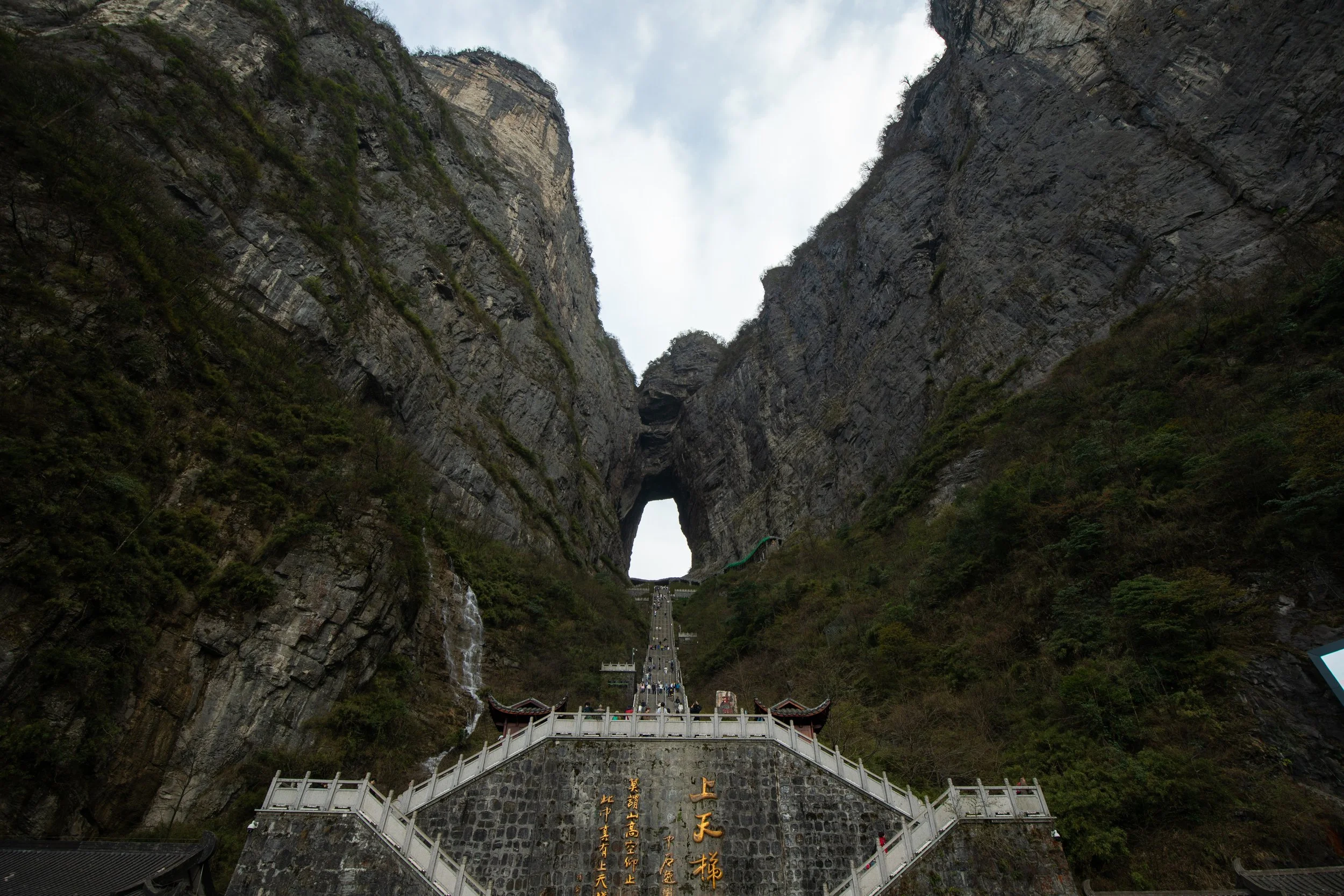
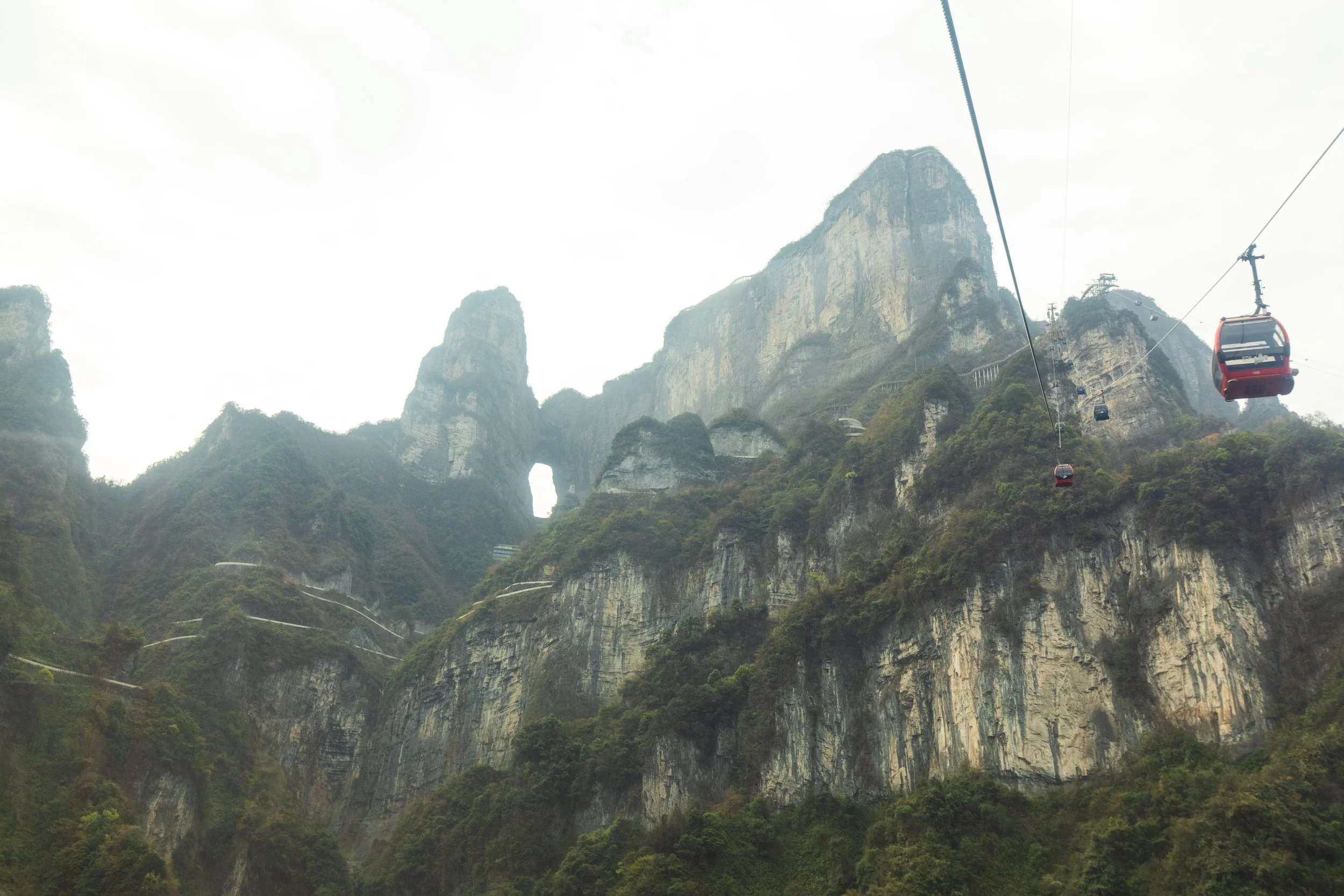
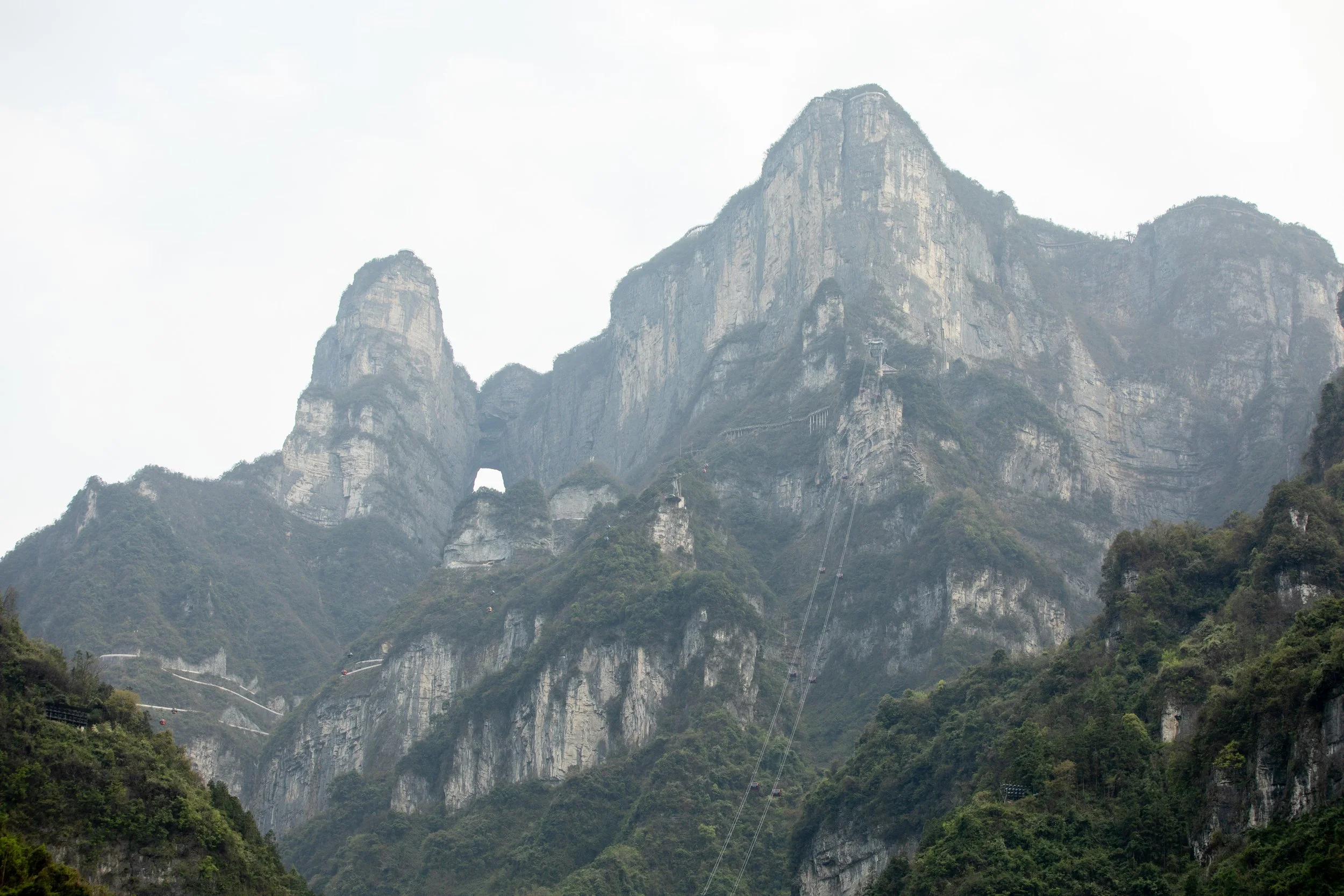
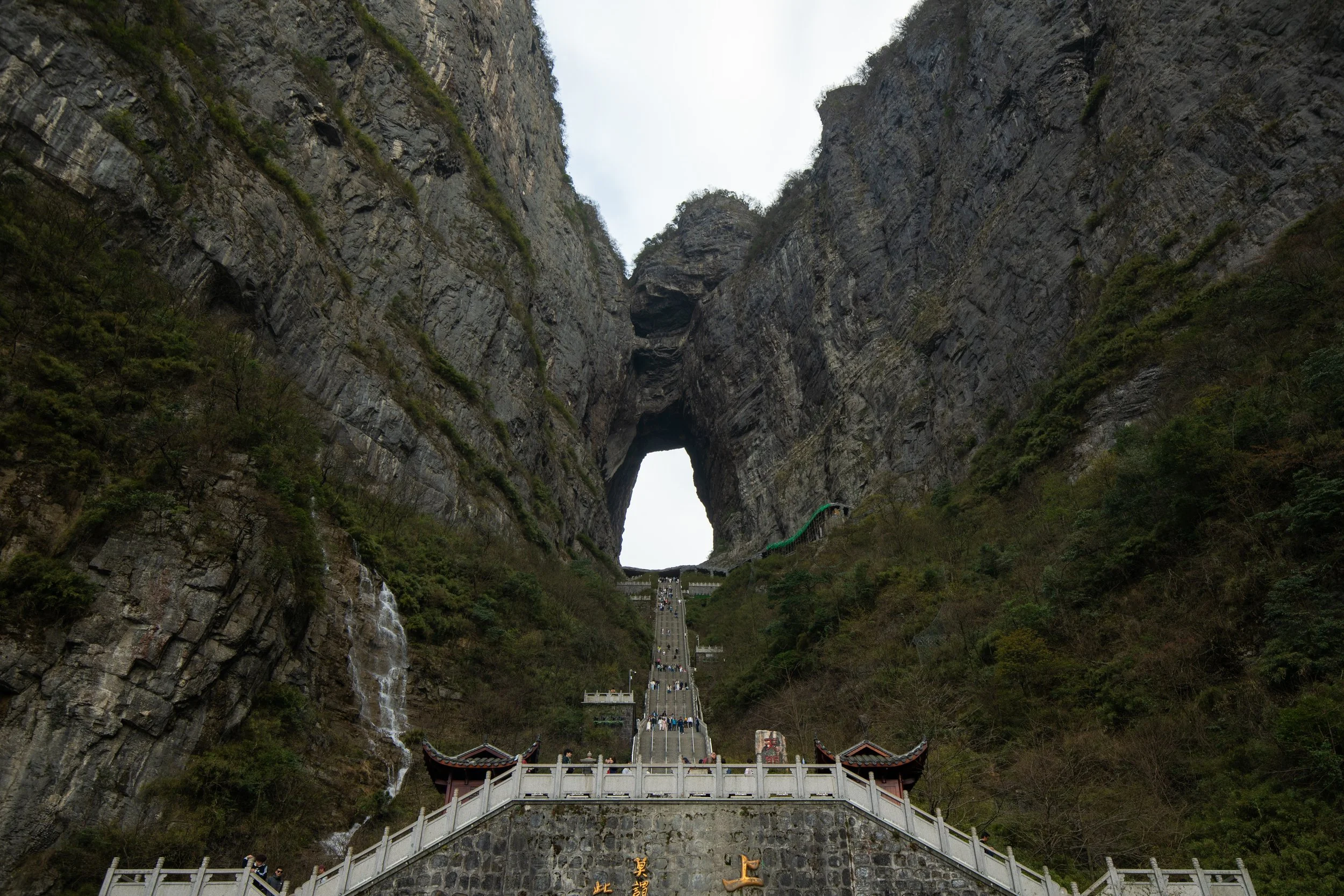
Tianmen Mountain / Tianmenshan is best known for Tianmen Cave (often called Heaven’s Gate), a huge natural arch with a long staircase leading to it - we’ve all seen the beautiful photos all across social media.
But Tianmen Mountain is a lot more than just the famous arch. It’s a full mountain park with cliffside paths, glass walkways, escalators, chair lifts and one of the longest cable car rides in the world. At the top, you will find a temple, a restaurant, shops, and viewing platforms all around.
Where is Tianmen Mountain
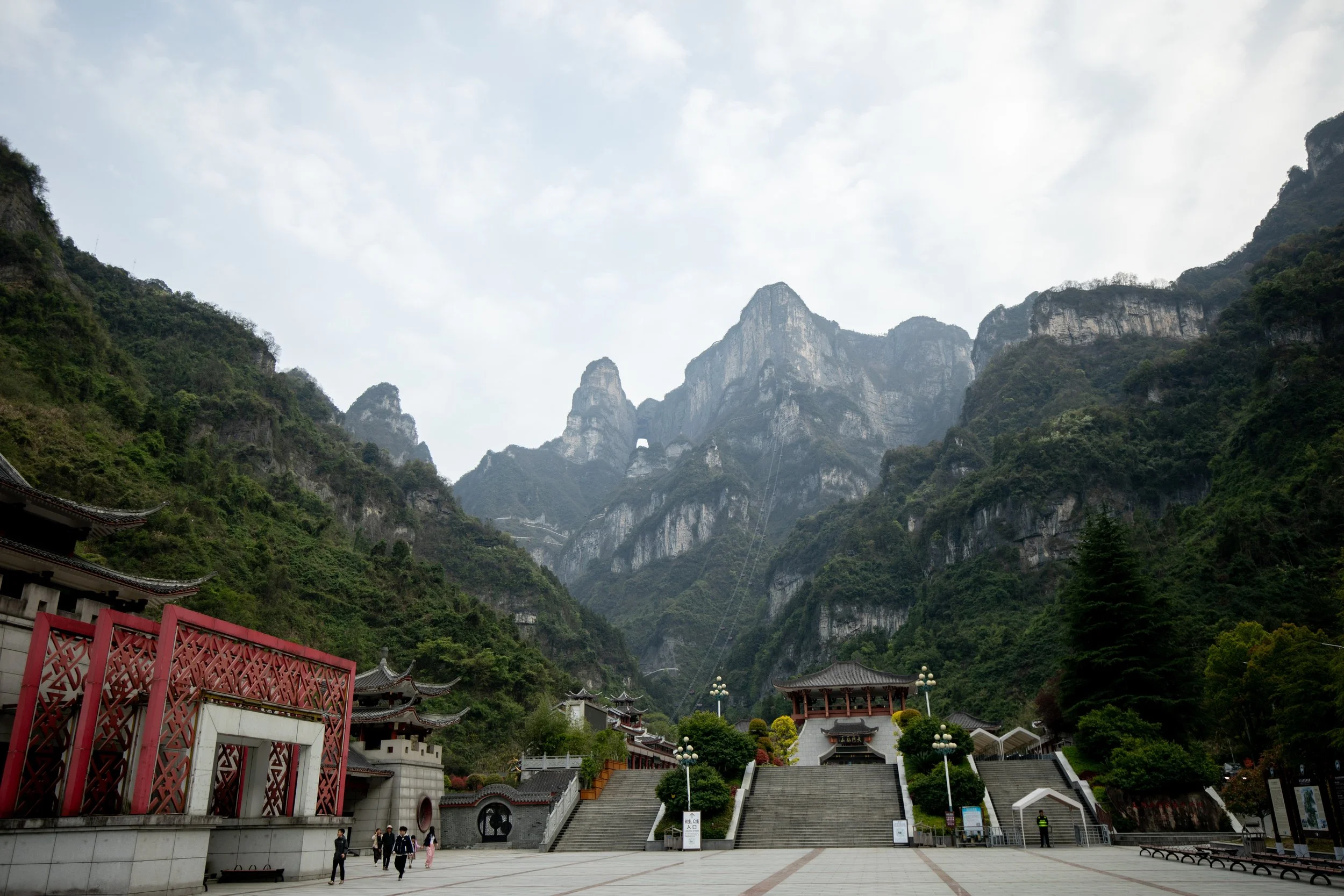
Tianmen Mountain is located in Zhangjiajie, in China’s Hunan Province.
When you’re visiting Zhangjiajie, Tianmen Mountain is the easiest experience to fit into a tight schedule. It’s easier to reach than Zhangjiajie’s other famous attraction, Zhangjiajie Natural Forest Park (often called Avatar Mountains), and it’s something that won’t take more than a day to explore in full.
The two distinct areas (Tianmen Mountain and Zhangjiajie National Forest Park) make for very different experiences and are both absolutely worth visiting.
It can be cold up there (1500m), compared to Zhanghiajie city (200m), so make sure to dress for the occasion.
How to get to Tianmen Mountain
Tianmen Mountain is surprisingly accessible.
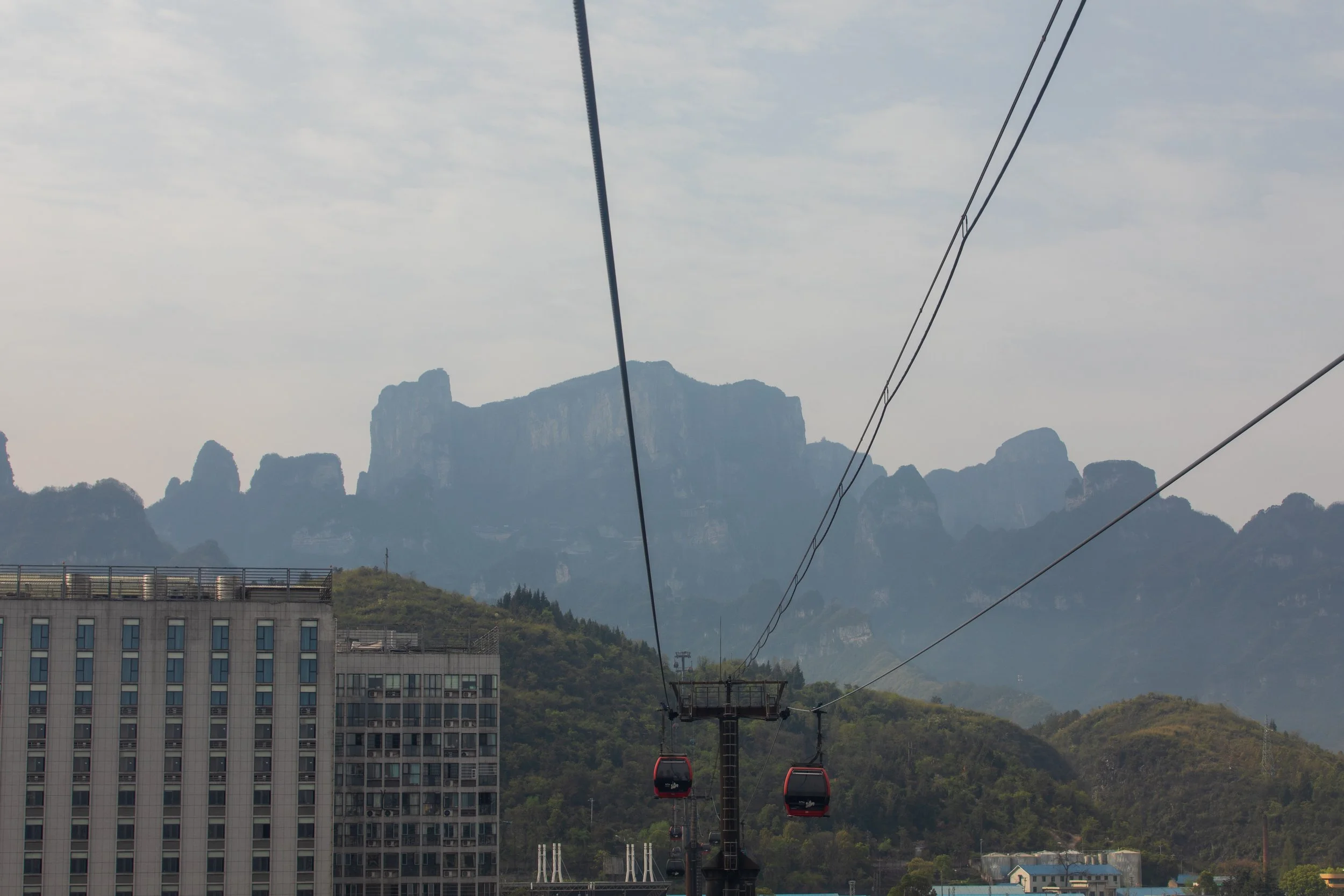
Unlike Zhangjiajie National Forest Park, which is about 40 minutes drive away next to a different town (Wulingyuan), Tianmen Mountain is right next to the city of Zhangjiajie and close to the airport, which is very convenient. Even more so, the cable car station is basically in the city center, so you don’t need a long transfer or complicated logistics.
If you’re staying in Zhangjiajie city, the cable car station is easy to reach by taxi or even on foot depending on your hotel location.
If you’re staying in Wulingyuan (near Zhangjiajie National Forest Park), it would be a 40/50 minute bus or taxi (Didi) ride to the cable car station. Buses are cheaper, but taxi fares are really low in China, so this option is worth considering.
Direct high-speed trains connect Zhangjiajie with major cities like Changsha or Chongqing. Note that Zhangjiajie city has two different train stations - Zhangjiajie Railway Station (in the city centre) and Zhangjiajie West Railway Station (on the road to Wulingyuan). Make sure to check which one your train departs from. This is something that can cause a bit of confusion in all major Chinese cities.
If you’re travelling from further afield, like Shanghai or Beijing, then flight would be the best option (2-3 hours). The airport is very close to the Zhangjiajie city center (10 minute drive).
Best time to visit Tianmen Mountain
Best time of year
Spring (March - May) and autumn (September - November) are the most comfortable months. It’s not too hot, not too cold, not too humid, and more importantly not too crowded.
Summer (July - August) brings lush green scenery, but also heat, humidity, and large domestic crowds. If you go during this period, expect queues - especially for the cable car.
Winter (December - February) is cold, but quieter and provides a different kind of experience when the mountain is covered in snow. Some places like glass walkways would be closed under icy conditions.
Avoid national holidays at all costs. Tianmen Mountain is a very popular natural attraction nationwide, and that is when people from all across China travel to those kinds of places. Attractions in China are well accustomed to this and pretty much designed to manage crowd control at a large scale. But still - you haven’t seen crowds until you’ve been to China!
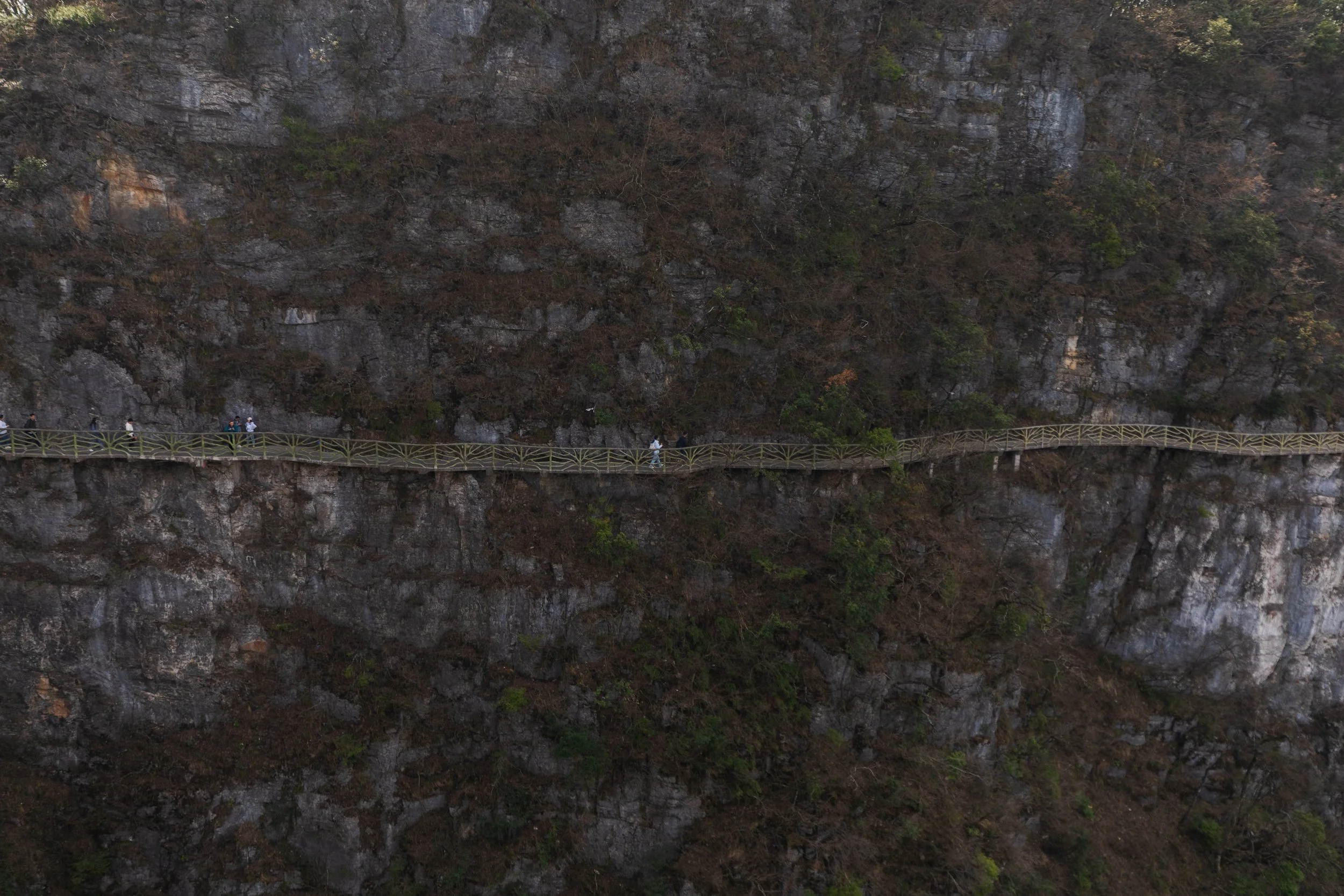
One important thing to understand about Tianmen Mountain is that weather changes everything. On a clear day, the views are expansive and majestic. On a foggy day, you may see almost nothing beyond a few meters - and that includes the Heaven’s Gate.
Check the forecast beforehand. If it’s going to be really bad weather, then it’s not worth going at all - especially as the entrance is quite expensive. Zhangjiajie National Forest Park can be amazing on a foggy day, but there won’t be much to see at Tianmen Mountain. Allow for some flexibility in your plans if you can, so that you could postpone to a different day if needed. I appreciate this would be difficult in high season, when you might have to book your timed entry well in advance.
Best time of day
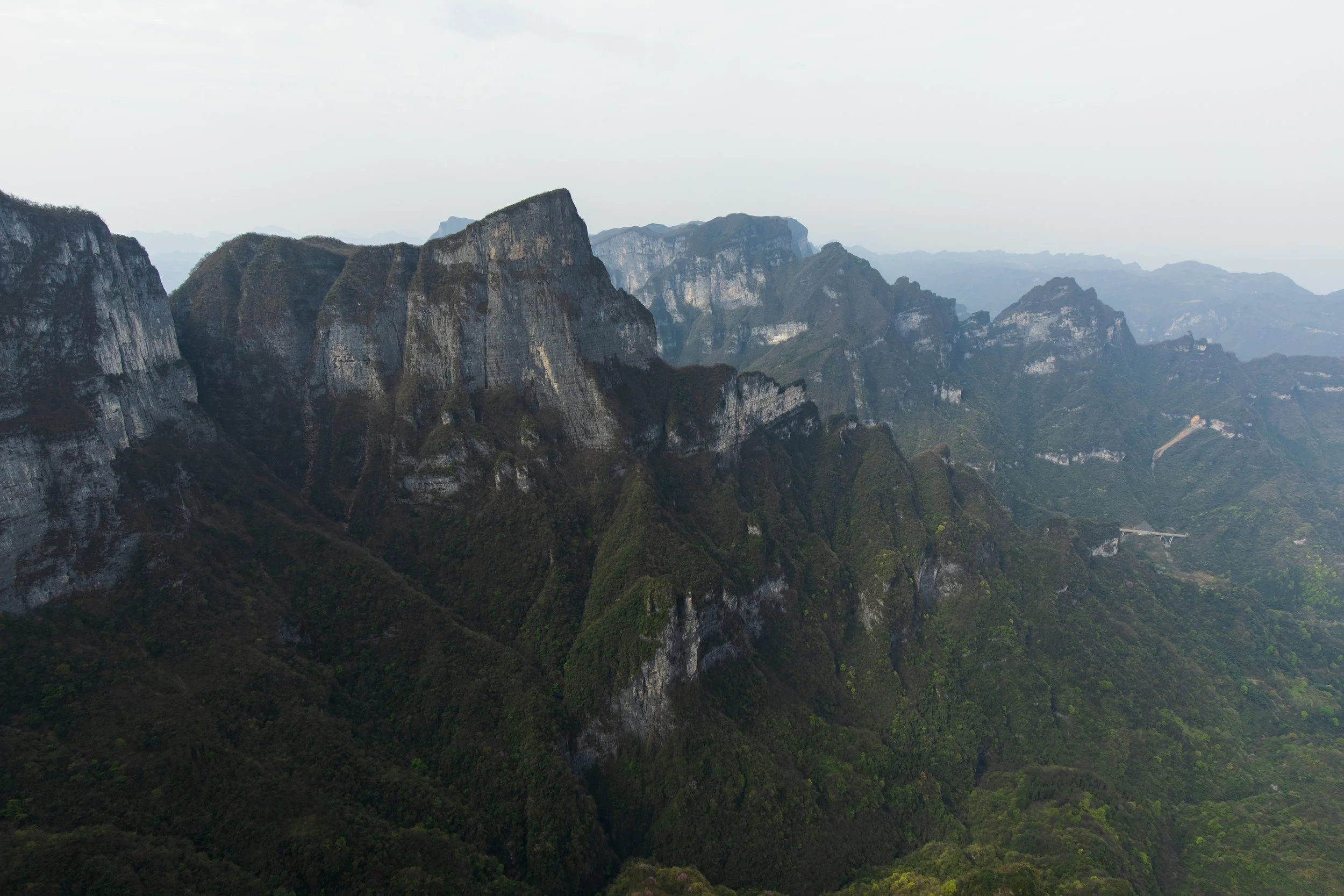
Start as early as possible. If you’re visiting in high season, I’d strongly recommend booking the earliest entry slot available. The opening hours are usually 07:30-18:00.
The cable car lines can build quickly, and you want to stay ahead of the tour groups. You’re also maximising your chances for clear skies with good views, by spending the full day in the park. There is a lot to see at Tianmen Mountain - it’s a full-day activity. Allow yourself enough time to make the most of it at a leisurely pace. You can always rest at the end of the day.
Entrance fee to Tianmen Mountain
At the time of our visit (April 2025), the entrance fee was 278¥ per person - that’s about £30. The price might vary slightly between low and high seasons.
At first sight, the entrance fee may seem relatively expensive, at least by Chinese standards - it’s likely to be one of the most expensive entrance fees on a trip to China. But given the complexity of the infrastructure involved (from cliffside paths to cableway maintenance works and the various facilities), and the importance of safety every step of the way, the cost feels justified. Some attractions out there are not worth their high entrance fee, but there is no doubt that Tianmen Mountain is absolutely worth visiting.
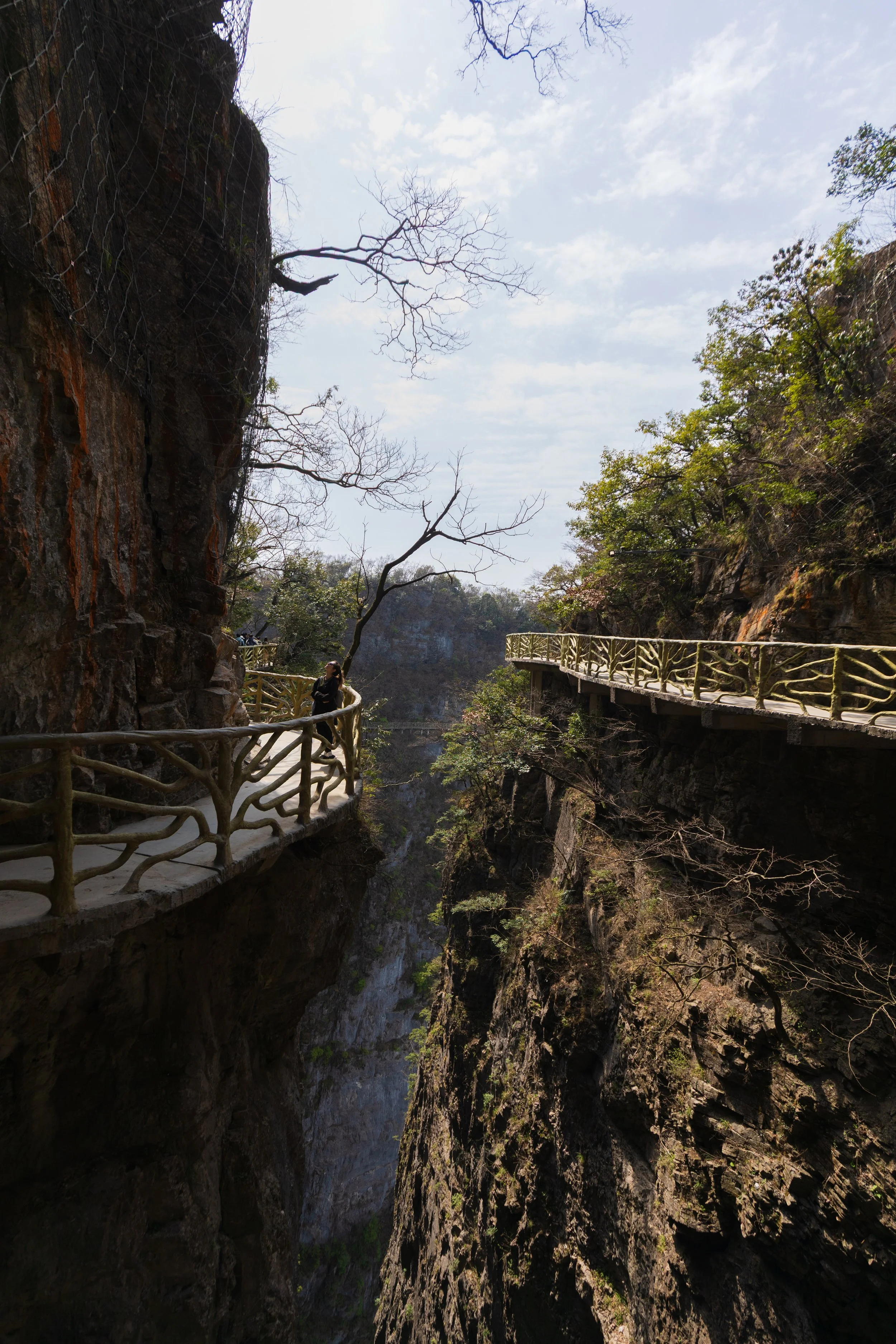
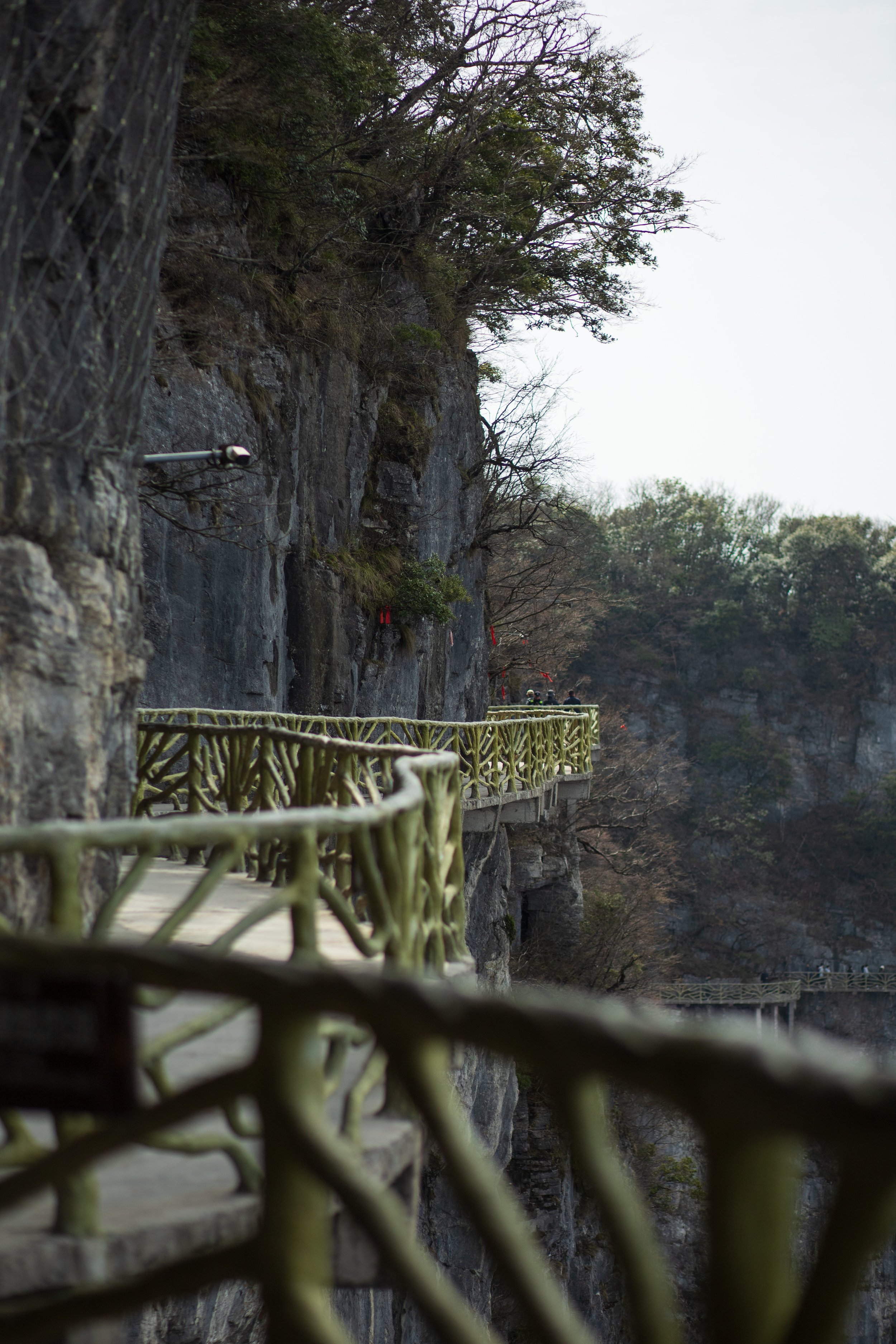
The entrance fee includes the main transfers and access to all areas of the park, but various optional activities come with an additional small fee. For example,
glass walkways (5¥ for shoe cover hire, which is mandatory)
forest sightseeing cable car (35¥ one-way)
Tianmen Gate lower escalators (32¥ one-way)
Tickets can be booked online on the official Wechat channel, but unless you really know what you are doing, I would strongly recommend just using trip.com (same price, and much easier).
Routes
You’ll see different options available (Lines A/B/C), and this may seem confusing at first.
In order to help manage crowds, Tianmen Mountain operates various routes with timed entries and visitors caps. It basically all boils down to whether you take the main Tiamenshan Cableway on the way up or on the way down.
Normally, this would determine the order of doing things (with plateau in the morning & Tianmen Gate in the afternoon for Line A, or the other way around for Line B).
However, from November 6 2025, the upper section of the main Tianmenshan Cableway (by far the best part) has been closed for maintenance works, and these works are expected to last 1-2 years. The lower station to middle station segment of the main cableway remains operational - cutting the journey time significantly. From the middle station, a shuttle bus would take you along the 99 Bends Road to Tianmen Gate Square (at the bottom of the steps). During this time, lower escalators are free of charge (only for Line A going up) to cover the rest of the journey. This means that your visit would start and end at Heaven’s Gate. Normally, the Tianmenshan Cableway would take you past Heaven’s Gate, all the way to the plateau at the top of the mountain.
While maintenance works are ongoing, Lines A/B/C are in fact very similar, but Line A is the clear winner, because it also includes free use of the lower escalators going up.
Note that none of the options allow for taking the main Tianmenshan Cableway on both legs.
Line A / Line B
Line A is Tianmenshan Cableway up & Express Cableway down.
Normally, a Line A itinerary could look something like this:
Tianmenshan Cableway Lower Station
→ Tianmenshan Cableway UP →
→ West Line walk →
Tianmenshan Temple
→ forest sightseeing cable car →
Yunmeng Fairy Peak (optional)
→ forest sightseeing cable car →
→ East Line walk →
→ upper escalators →
Tianmen Cave
→ stairs / lower escalators →
Tianmen Cave Square
→ Express Cableway DOWN →
Mountain Gate
→ shuttle bus →
Tianmenshan Cableway Lower Station
Line B
Line B is Express Cableway up & Tianmenshan Cableway down - it’s basically Line A done in reverse.
Normally, a Line B itinerary could look something like this:
Tianmenshan Cableway Lower Station
→ shuttle bus →
Mountain Gate
→ Express Cableway UP →
Tianmen Cave Square
→ stairs / lower escalators →
Tianmen Cave
→ upper escalators →
→ East Line walk →
Tianmenshan Temple
→ forest sightseeing cable car →
Yunmeng Fairy Peak (optional)
→ forest sightseeing cable car →
→ West Line walk →
→ Tianmenshan Cableway DOWN →
Tianmenshan Cableway Lower Station
Note how Lines A and B both include the same things, it’s just the order that is different. Line A is the more popular route, and the better option, in my opinion. There is just something really special about laying eyes on Tianmen Mountain for the first time, under the softer light of the morning, as you journey for almost 30min in a small cablecar. This wouldn’t be as impactful at the end, after a full day of exploration.
Normally, the other deciding factor between Line A and Line B is the weather. You should plan to visit Heaven’s Gate during the time of day which is more likely to be clear of fog / low clouds. However, while maintenance works are ongoing, you get to see the arch twice anyway, so this doesn’t matter.
Line A is also the favourite among tour groups, so it’s really important to start as early as possible to avoid the potentially very long queue at the lower station. The Express cable cars are larger, so queuing is less likely to be an issue on the return journey.
Line C
Line C is Express Cableway up & down.
Normally, a Line C itinerary could look something like this:
Tianmenshan Cableway Lower Station
→ shuttle bus →
Mountain Gate
→ Express Cableway UP →
Tianmen Cave Square + optional trip to Tianmen Cave & beyond
→ Express Cableway DOWN →
Mountain Gate
→ shuttle bus →
Tianmenshan Cableway Lower Station
For a complete tour of Tianmen Mountain, this option is objectively inferior to the other two, because it is less interesting and less time-efficient, despite costing the same amount.
The biggest downside is that you don’t get to experience the main Tianmenshan Cableway, which is an attraction in itself.
If you plan to visit the area at the top of the mountain, Line C is not the most suitable, because the Express Cableway upper station is at the base of the stairs leading up to Heaven’s Gate, whereas the main Tianmenshan Cableway takes you all the way to the highest point, above Heaven’s Gate. This means you need to make the journey between the cableway and the base of Heaven’s Gate twice (via stairs or lower escalators). Of course, this point is not applicable while maintenance works are ongoing.
There are a few scenarios when this option might work though.
If you are extremely limited on time and only really want to check out Heaven’t Gate, perhaps without even planning to journey up the stairs, then Line C is the quickest way to do that. Within opening hours, Line C also provides a straight-forward, if costly, way to quickly access this area of the mountain after dark, when the stairs and arch might be nicely illuminated (based on photos seen online).
Lastly, if you are travelling in high season and you haven’t planned ahead, both of the more popular routes Line A / Line B might be sold out, leaving Line C as the only alternative.
Best things to do at Tianmen Mountain
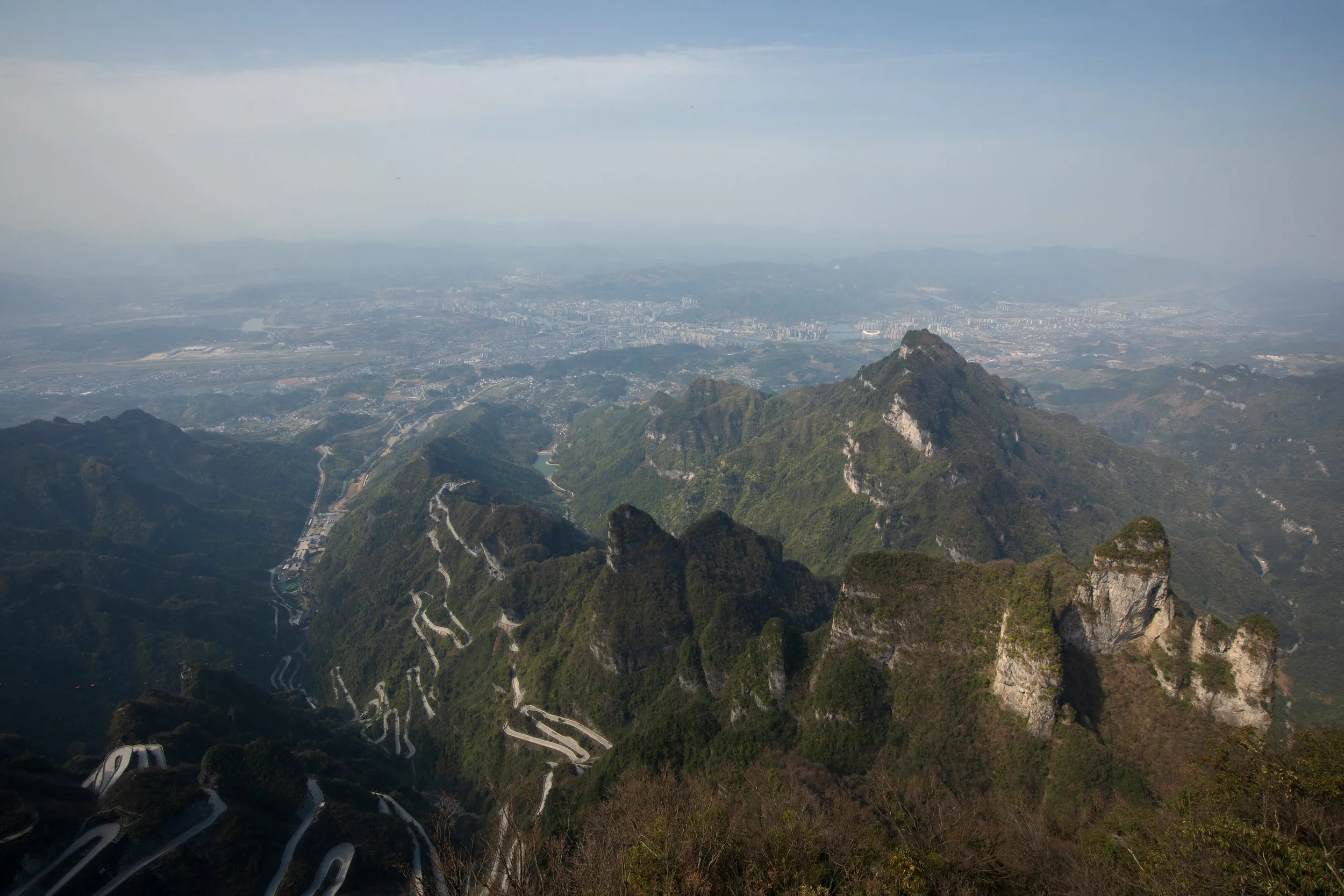
Like many other of China’s big attractions, Tianmen Mountain is a vast complex made up of several attractions. There is so much to see and it’s easy to fill up an entire day with activities.
Tianmenshan Cable Car
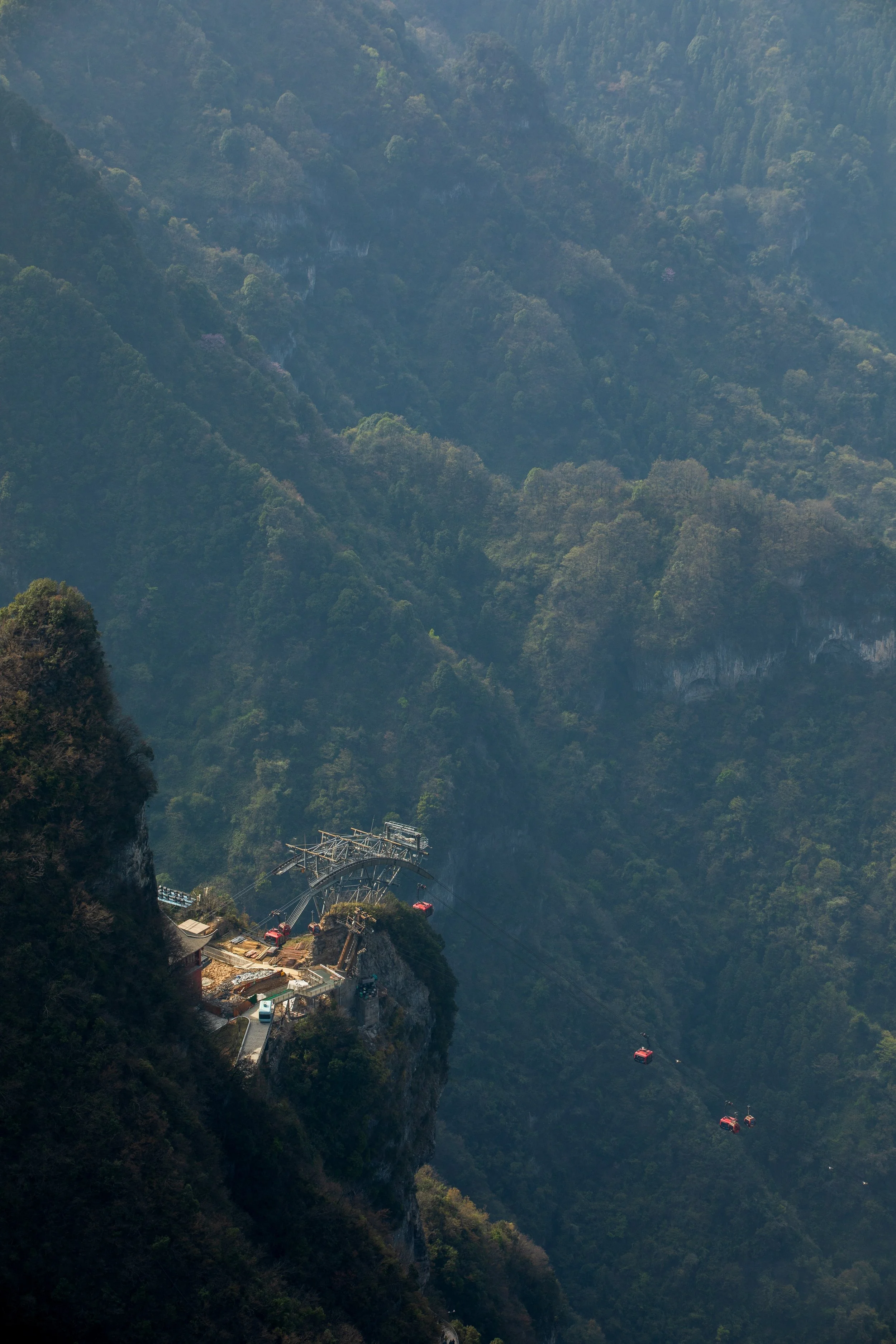
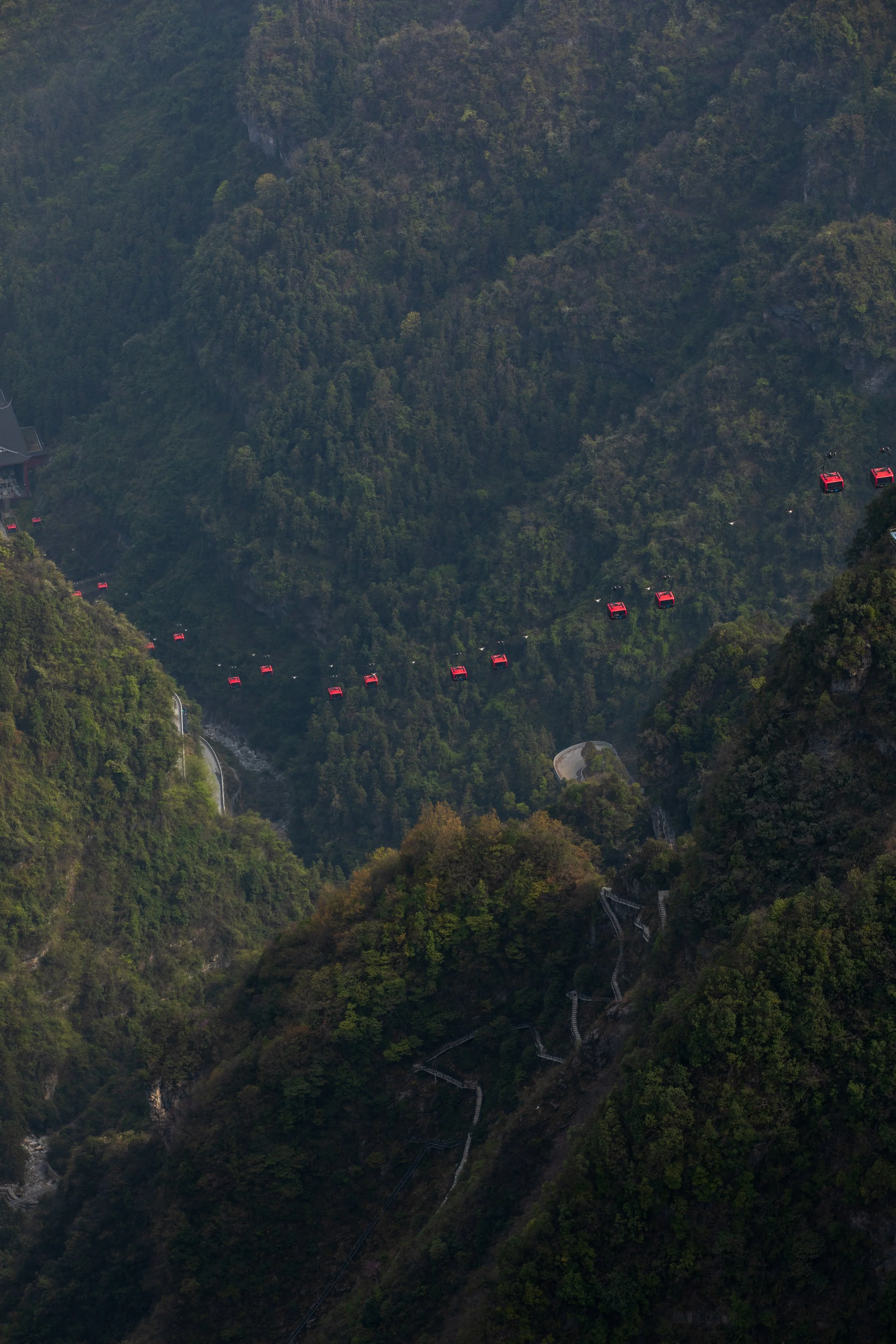
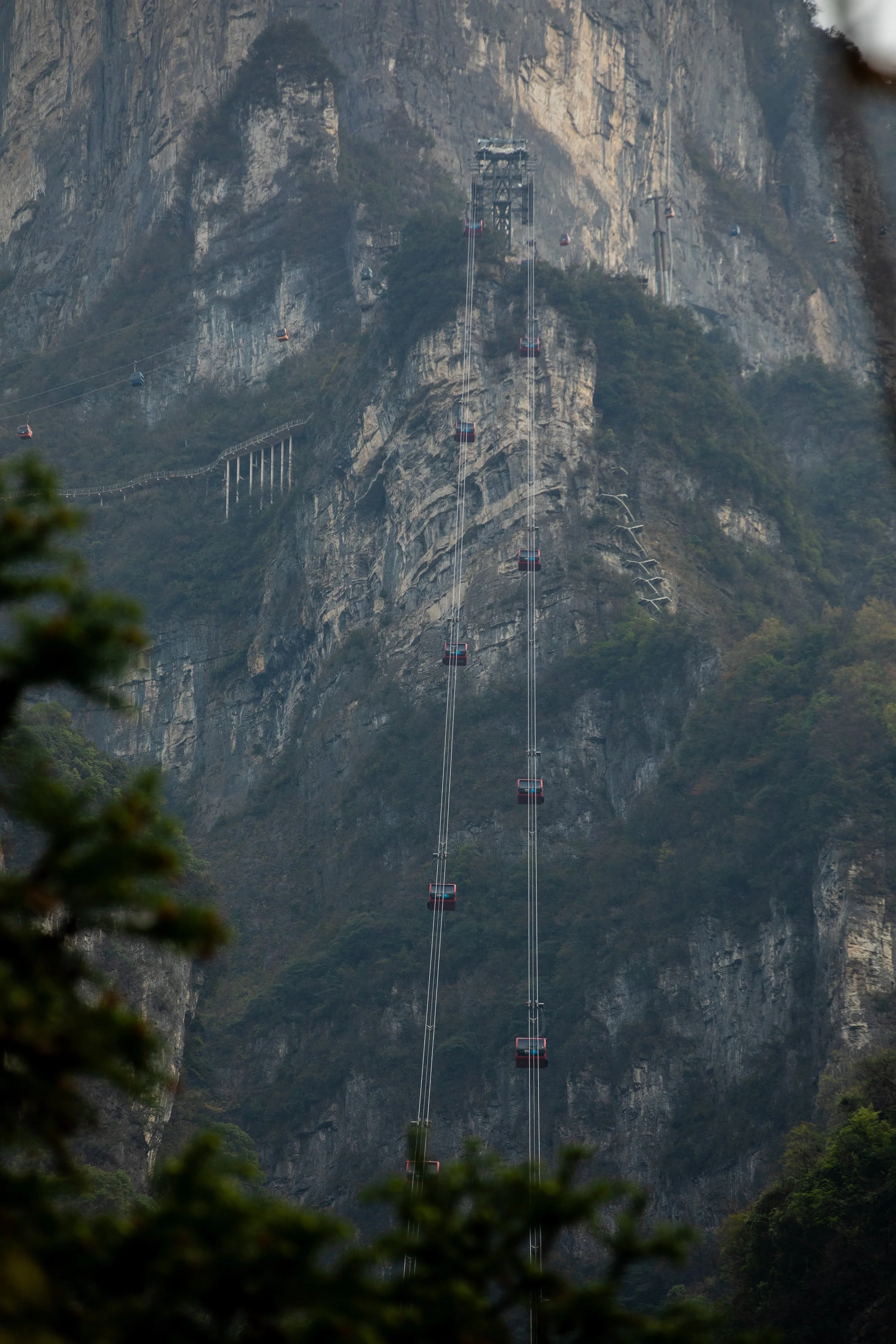
The ride itself is the attraction. The cable car stretches for around 7.5km from the city center to the mountain top, climbing steadily over urban areas, farmland, and then straight onto steep cliffs, climbing over 1,000m in elevation. The journey takes almost 30minutes, and the last part of it going up is simply breathtaking.
West Line & East Lines
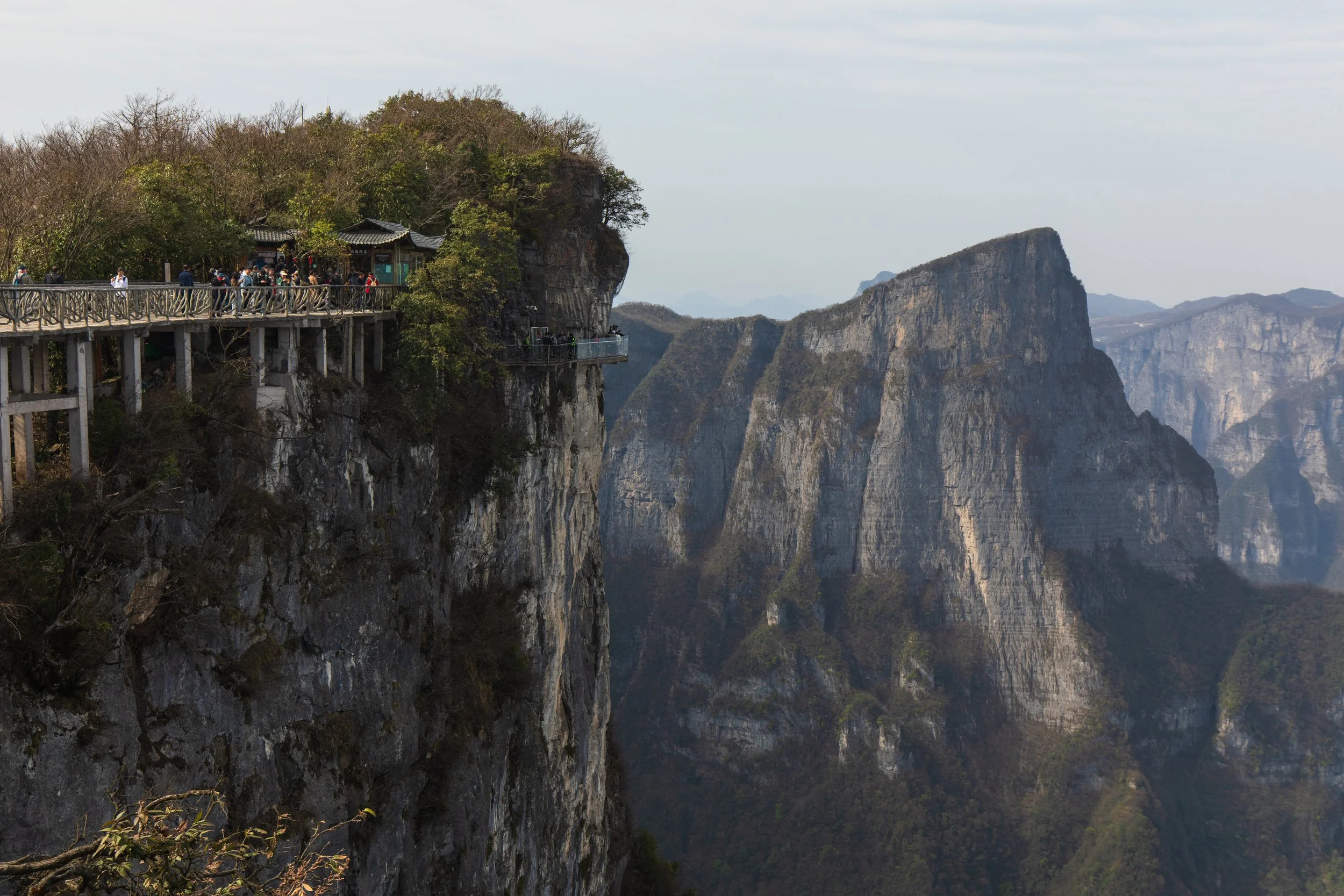
The walkways around the plateau at the top of the mountain are divided into two routes - West Line and East Line. On a standard itinerary, you would get to experience both as you loop around the plateau. In terms of views and things to see, I would say that the West Line is more interesting than the East Line, but walking it makes sense to loop around both.
Glass Walkways
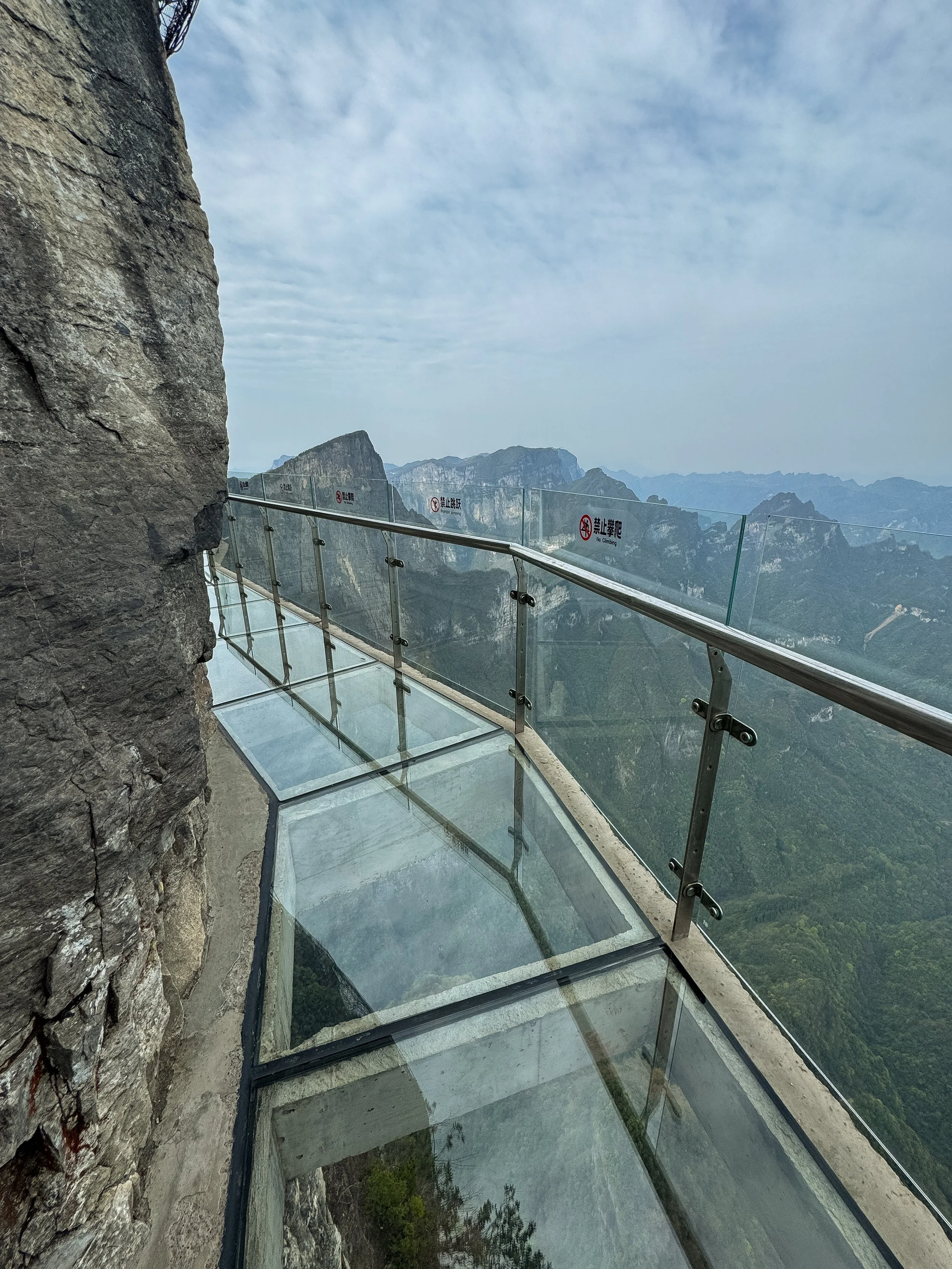
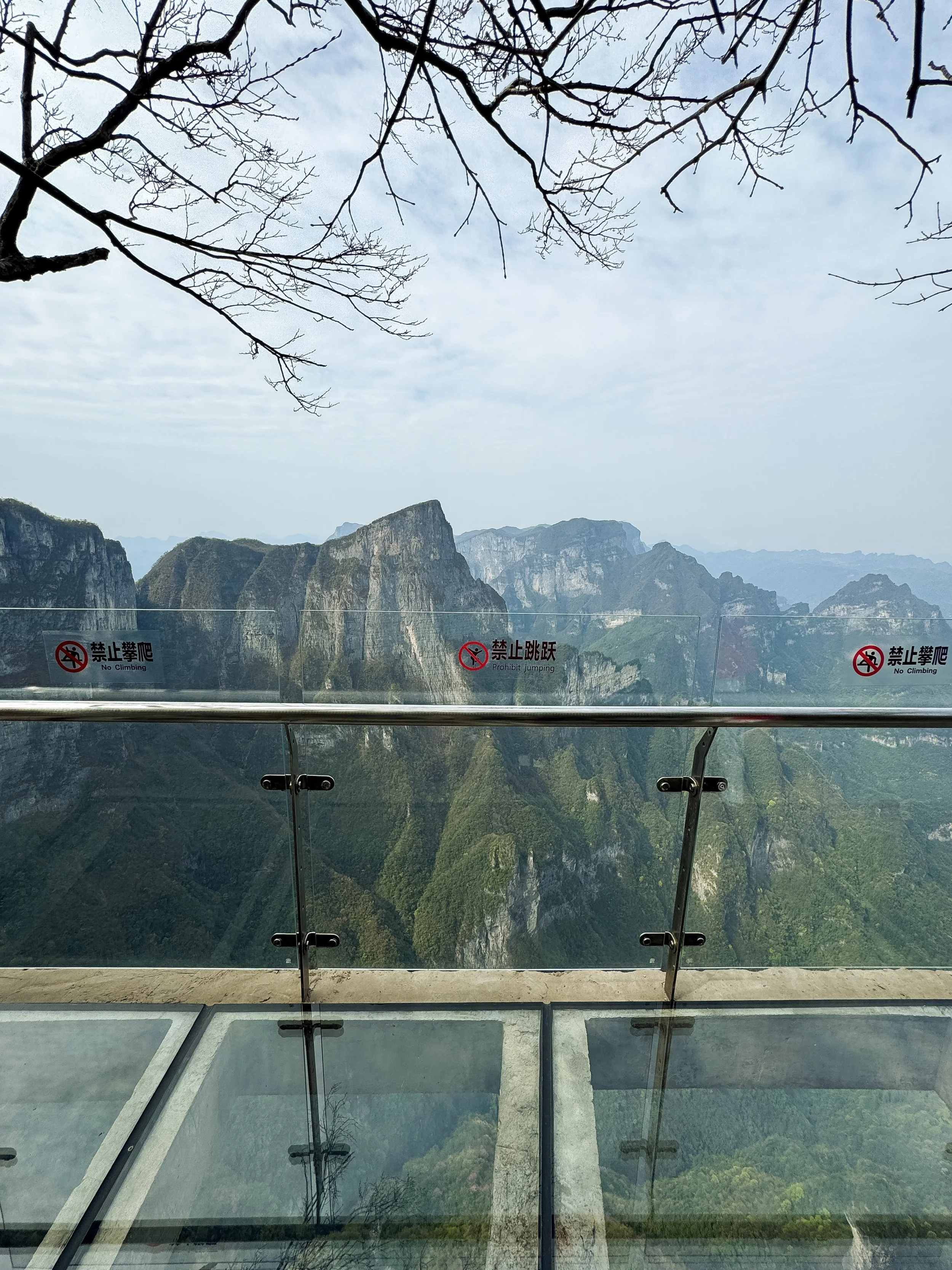
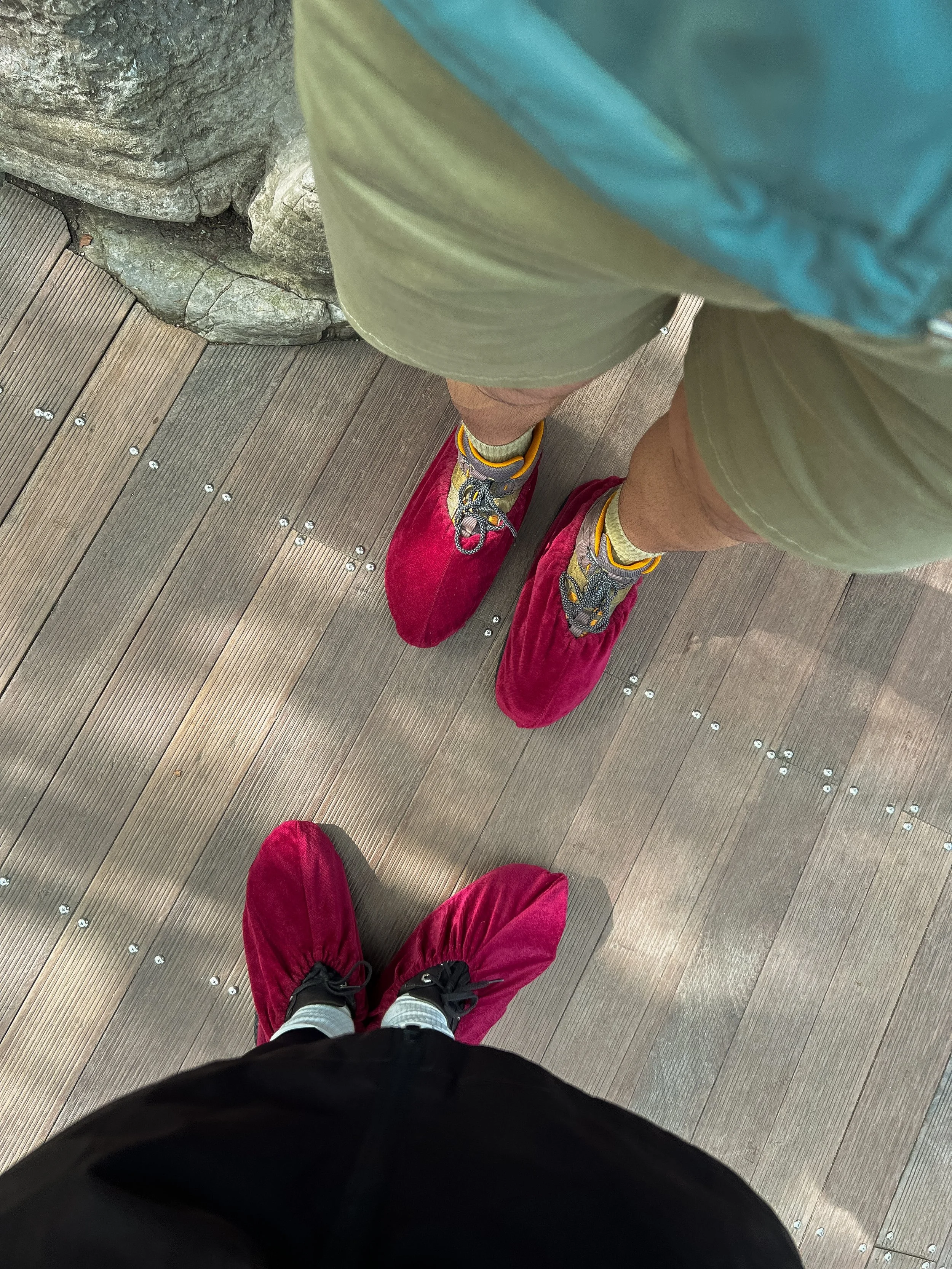
There are three different sections of glass walkways around the plateau, and it’s enough to try just one of them (they’re all very similar). You’ll need to hire shoe covers (5¥).
This experience is really not as terrifying as it sounds - not that I would have wanted it to be. But the glass floor does give you a better sense of the sheer drop that lies below your feet. Walking along the glass walkway reminded me of the glass bridge episode of Squid Game at every step.
This activity is entirely optional and not part of the main path - there is always an alternative normal path for the less adventurous among us.
Wishing Forest
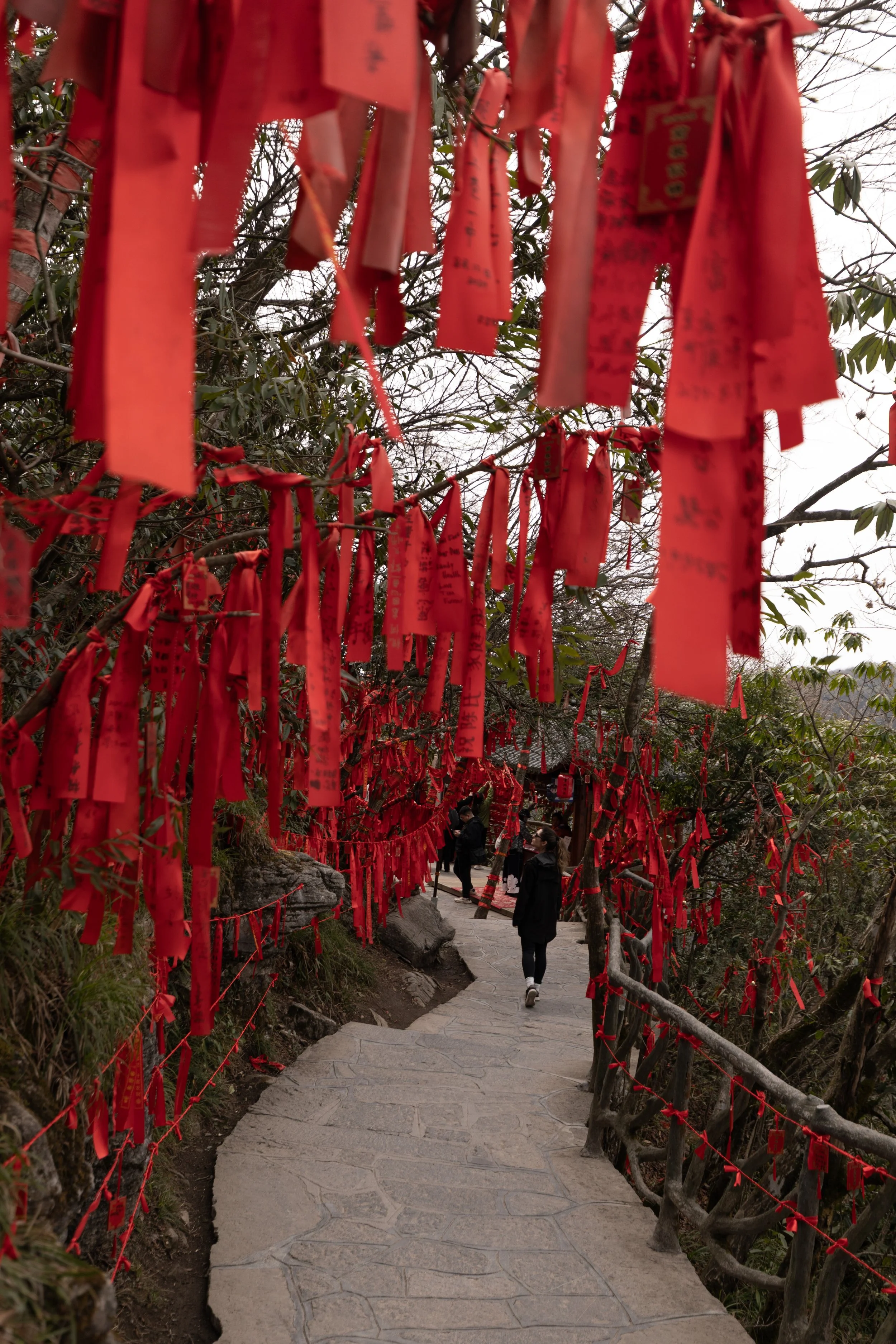
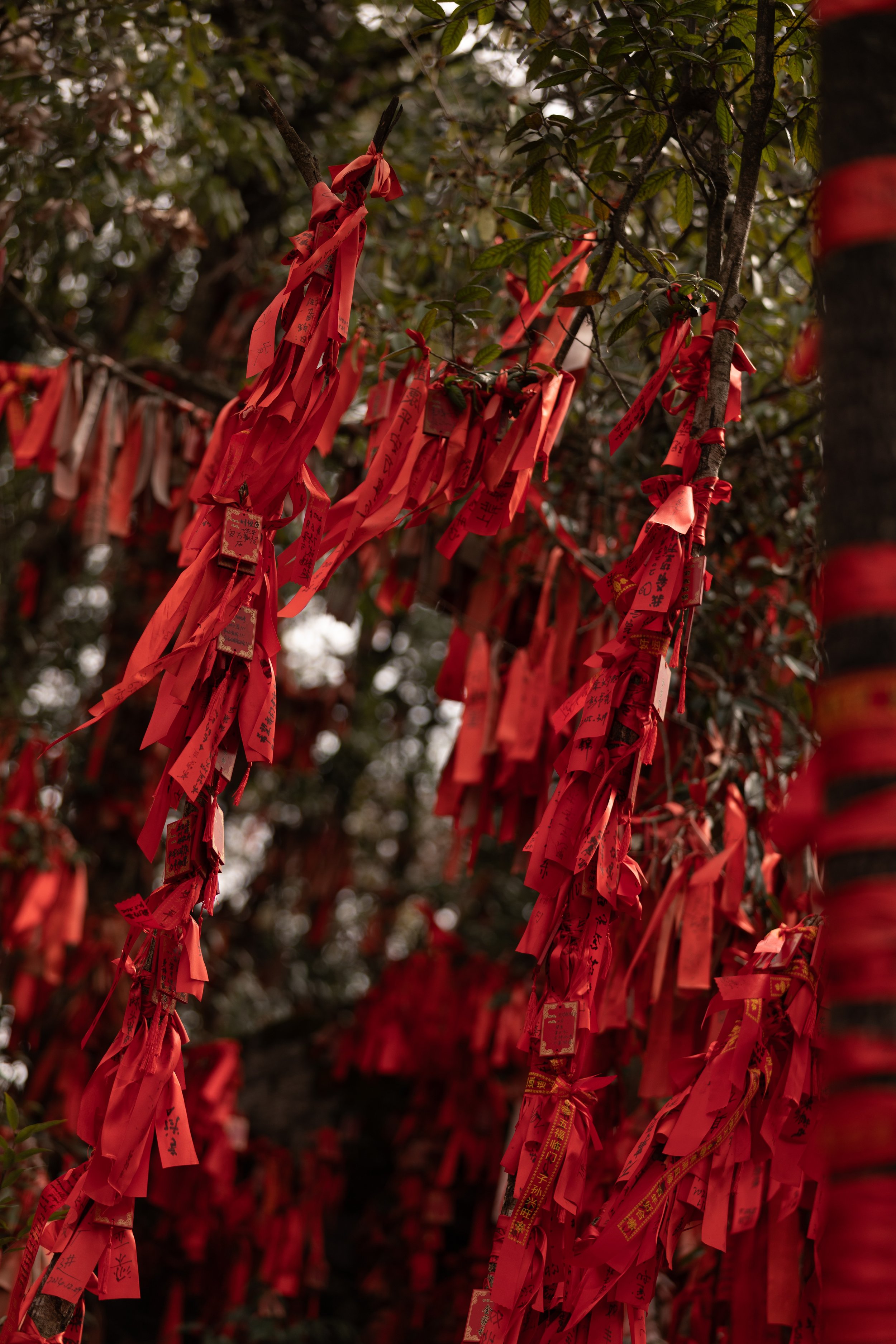
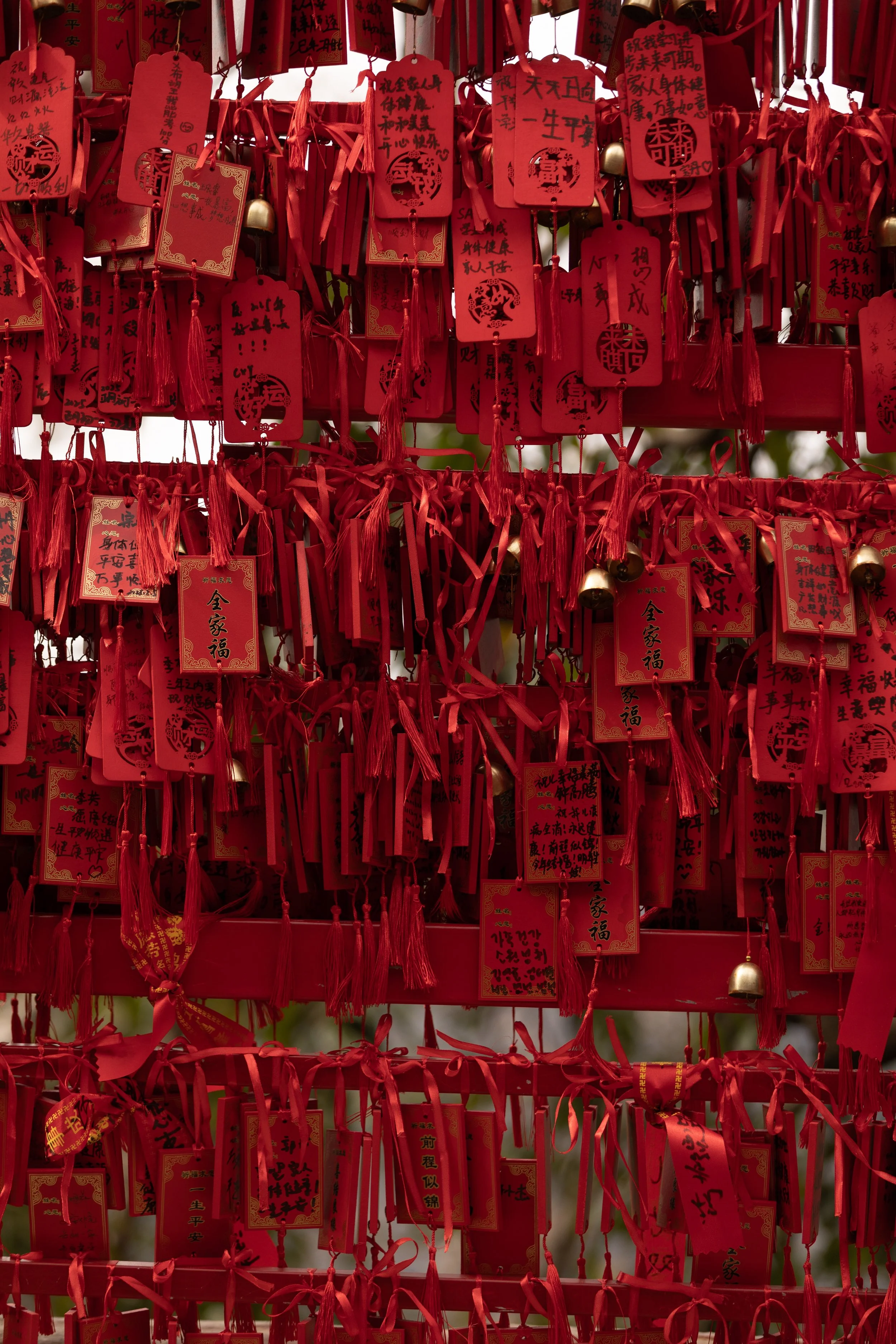
This is a great stop on the West Line, where you are basically walking through a little forest of red ribbons tied to trees, fences, and every other surface - it’s mesmerising.
You can join in by purchasing a small ribbon (around 10¥ from memory), and writing a wish, and tying it onto a branch. Based on our experience alone, I can confirm that the wish would come true within the current Chinese year cycle! Regardless, it’s a lovely symbolic gesture, a simple and memorable thing to do.
Tianmenshan Temple
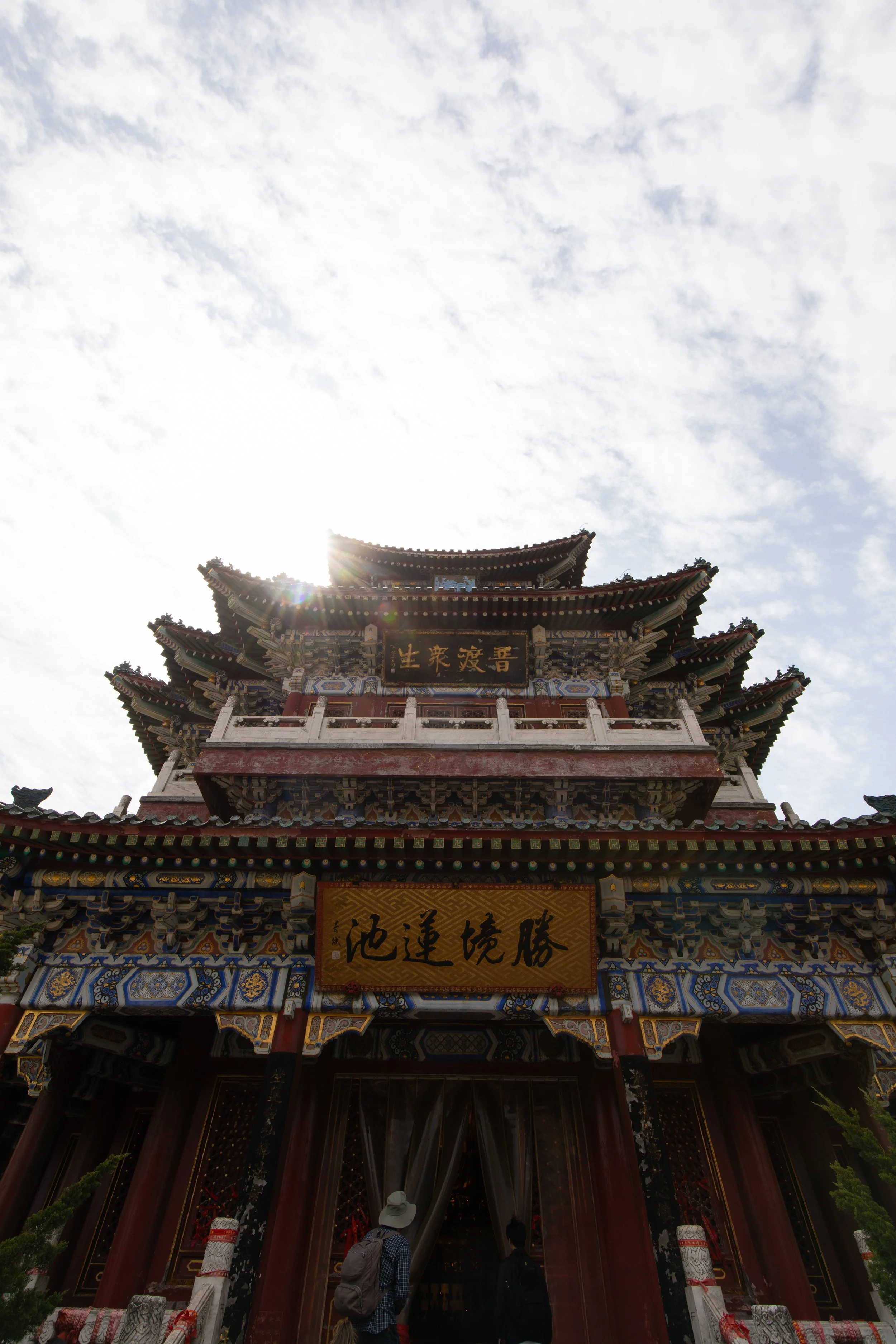
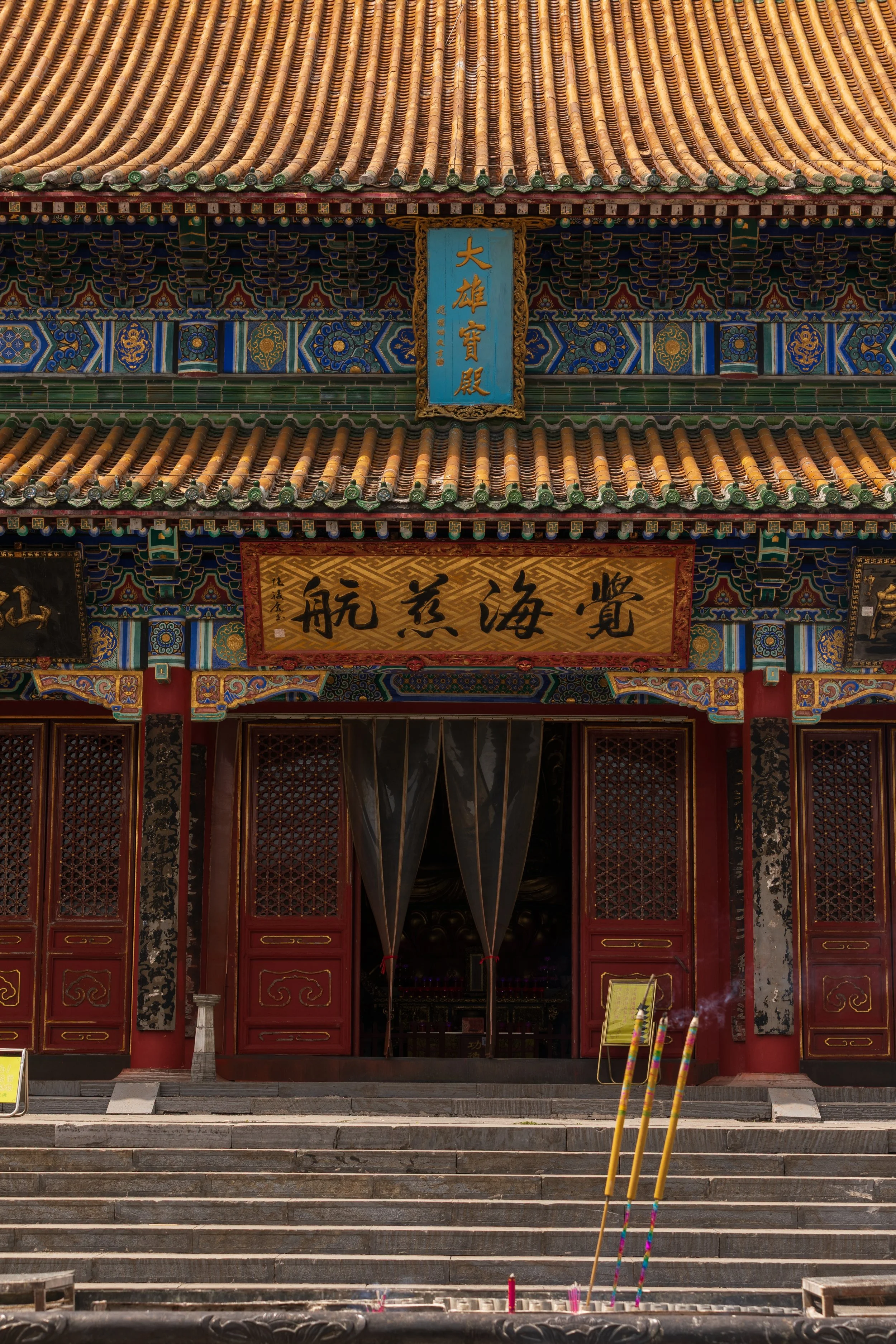
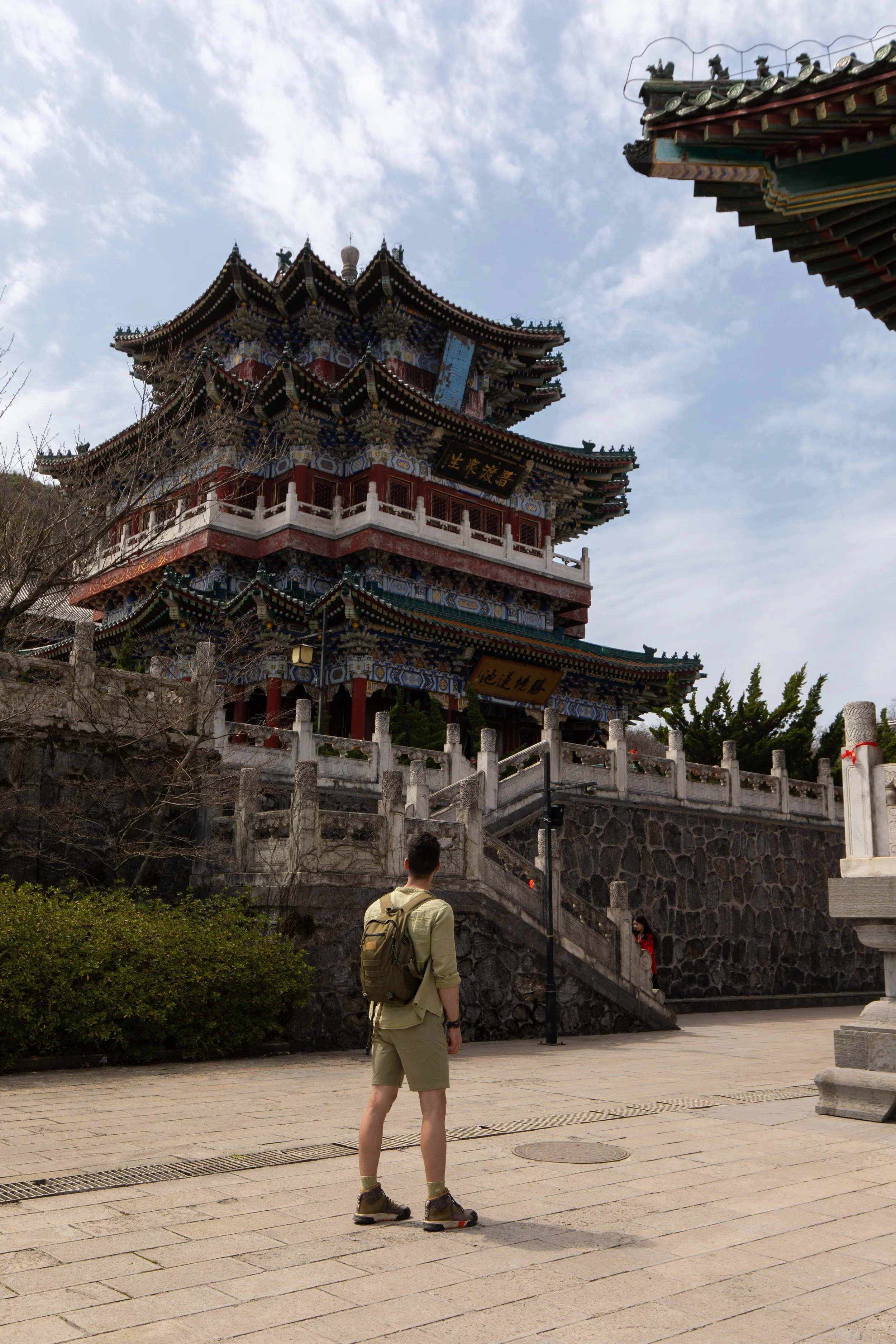
This is the halfway point on your journey around the top of the mountain, at the other side of the plateau, between West and East Lines. It’s a peaceful area, with a pretty impressive temple building and grounds - a good place to escape the dramatic heights of Tianmen Mountain.
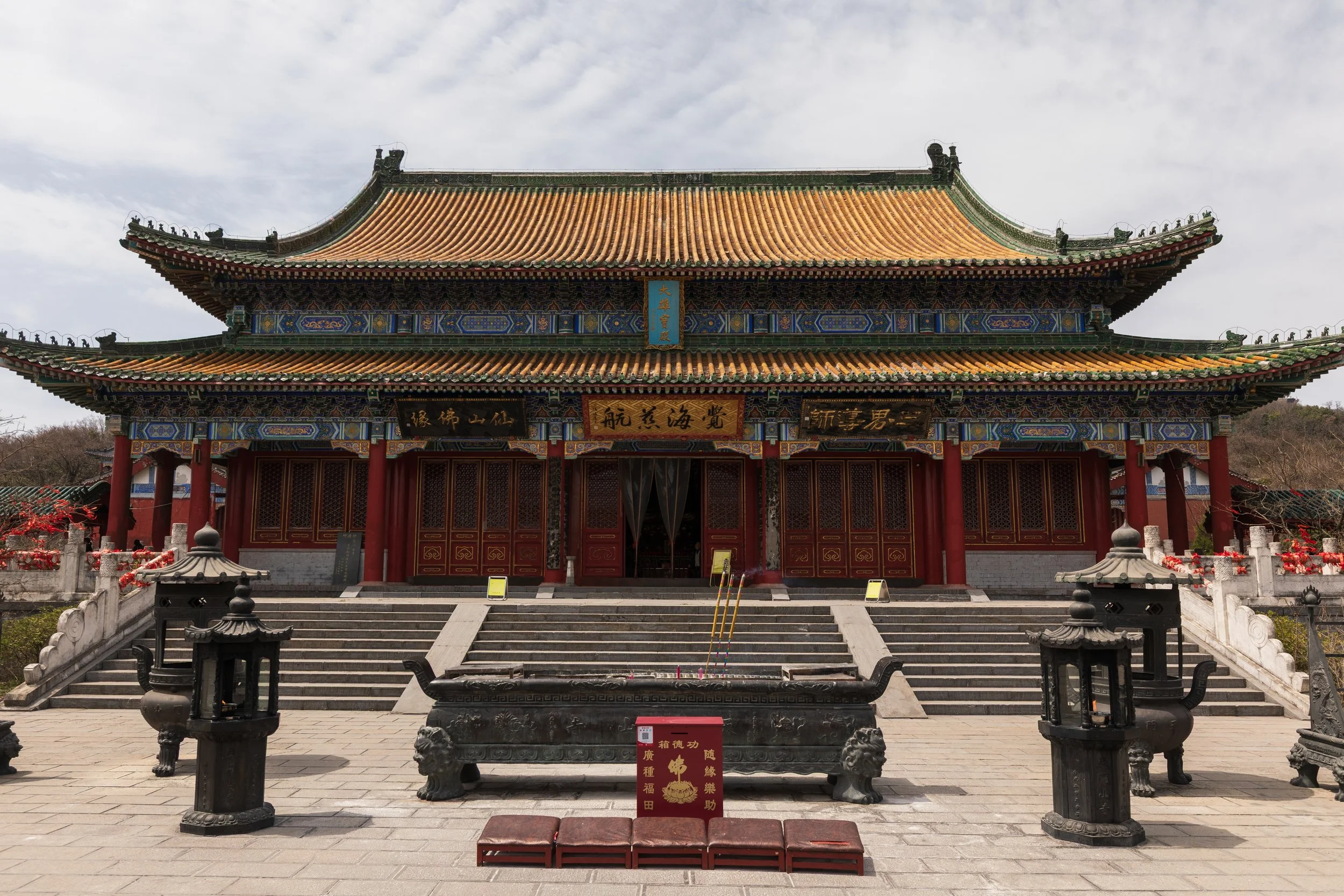
There are plenty of facilities around this area, including a restaurant, shops and toilets. If you are an avid stamp enthusiast like I am, you’ll find some around this area.
I will say that the food options on the plateau are very limited (as they should be), and not particularly great. I would strongly recommend bringing your own lunch snacks/drink for the day. We did not do this, and indulged in some meat-on-a-stick offerings and cucumber crisps.
Forest sightseeing cable car
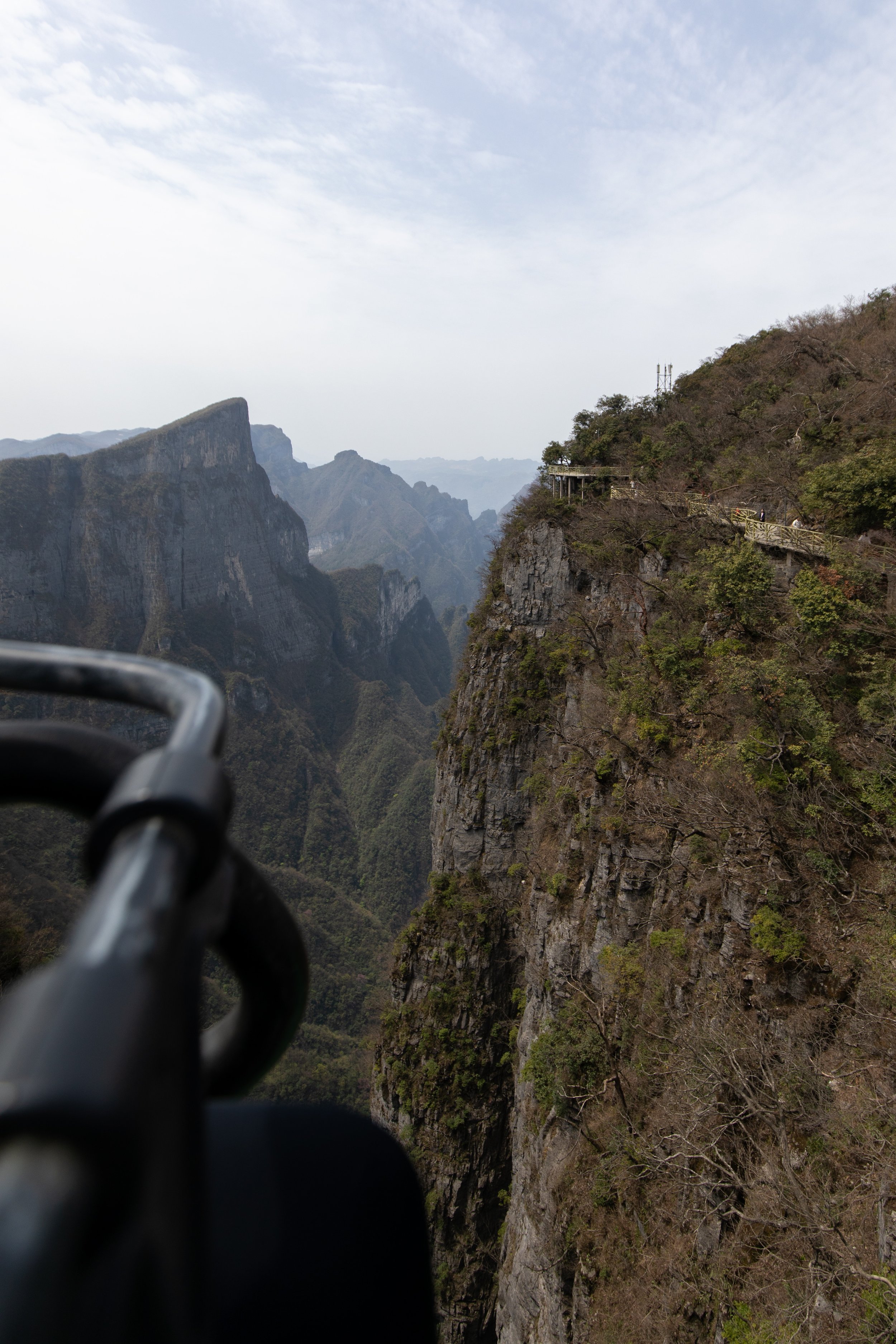
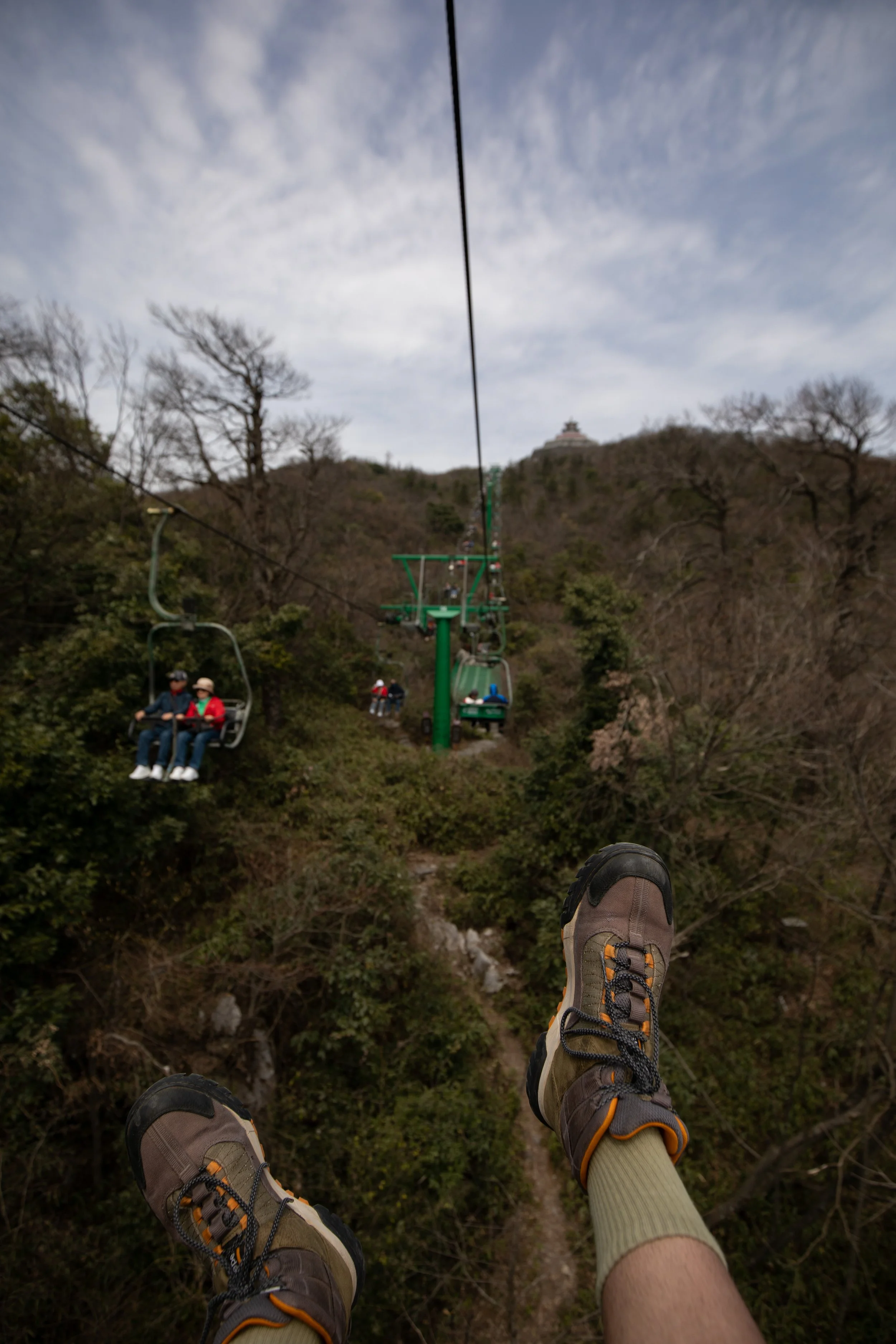
This is a really fun activity, though perhaps not for someone with a fear of heights. It isn’t a standard cable car, but an open-air chair lift that takes you from the temple area to Yunmeng Fairy Peak. This ride is entirely optional (35¥ one-way), as you can easily reach Yunmeng Fairy Peak using alternative routes that aren’t as adrenaline-inducing.
Yunmeng Fairy Peak
This is more the other end of a fun chair lift ride, than a worthwhile attraction on its own. It’s an unimpressive building located towards the inner area of the plateau, with nice views of the surrounding area, but not as impressive as the views you can see from all around the cliffs of Tianmen Mountain.
Heaven’s Gate
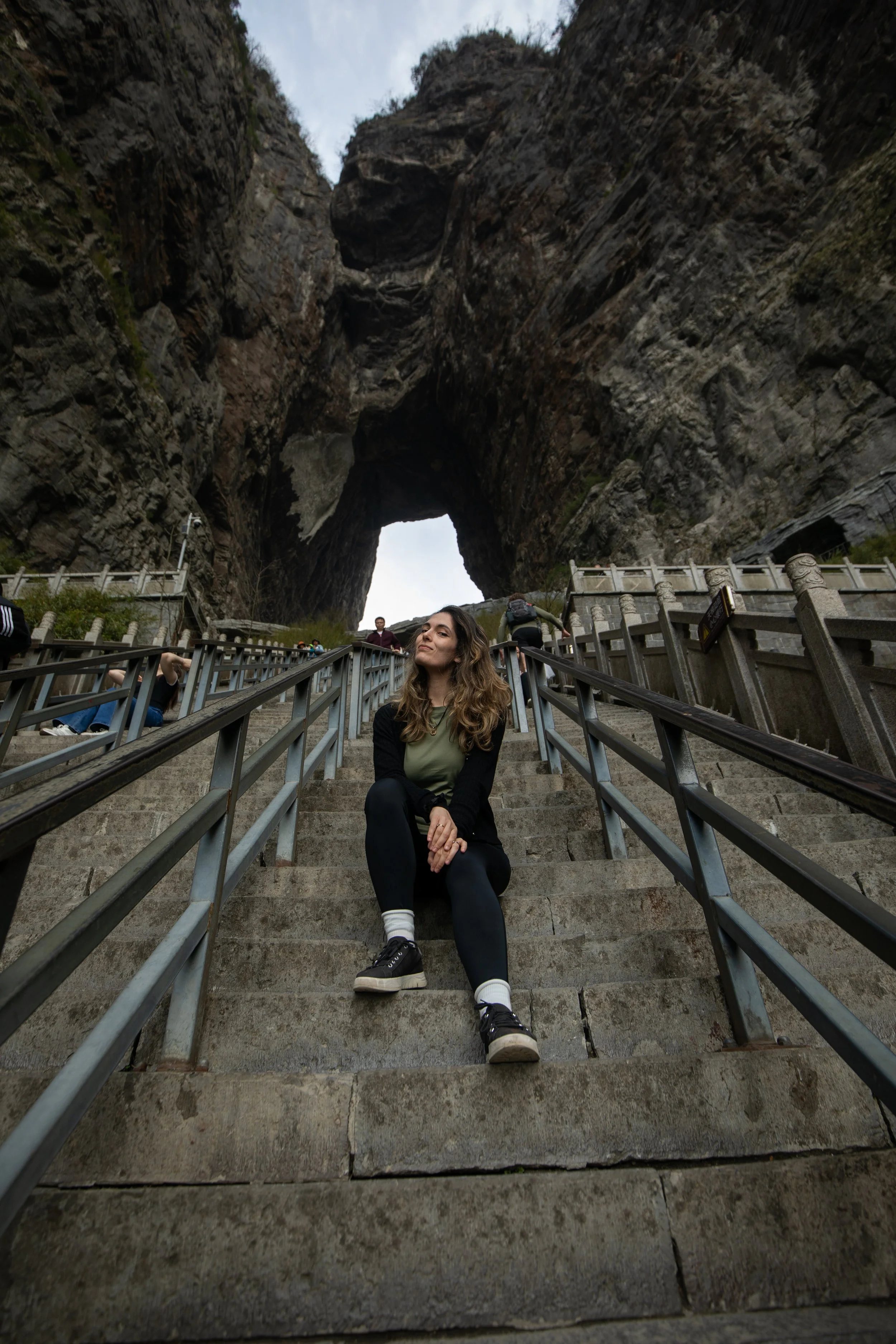
This is the famous natural arch and the main star of the show. After all, it’s what gives Tianmen Mountain its name. It’s one of the largest and most impressive natural arches in the world, and makes for an almost surreal sight. The way the arch lies at an elevation, with 999 steps leading to it, really adds to that dramatic image of a stairway to heaven.
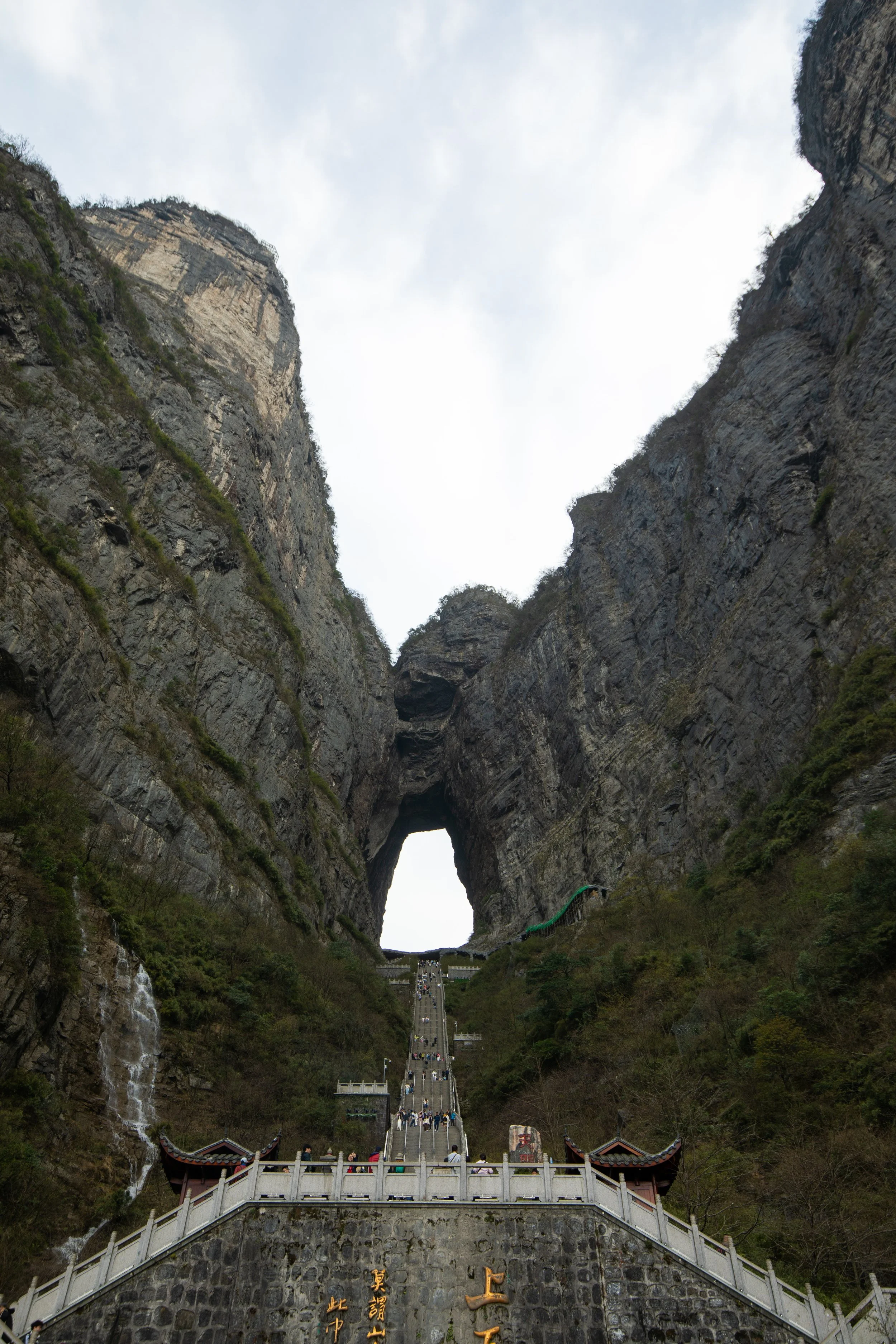
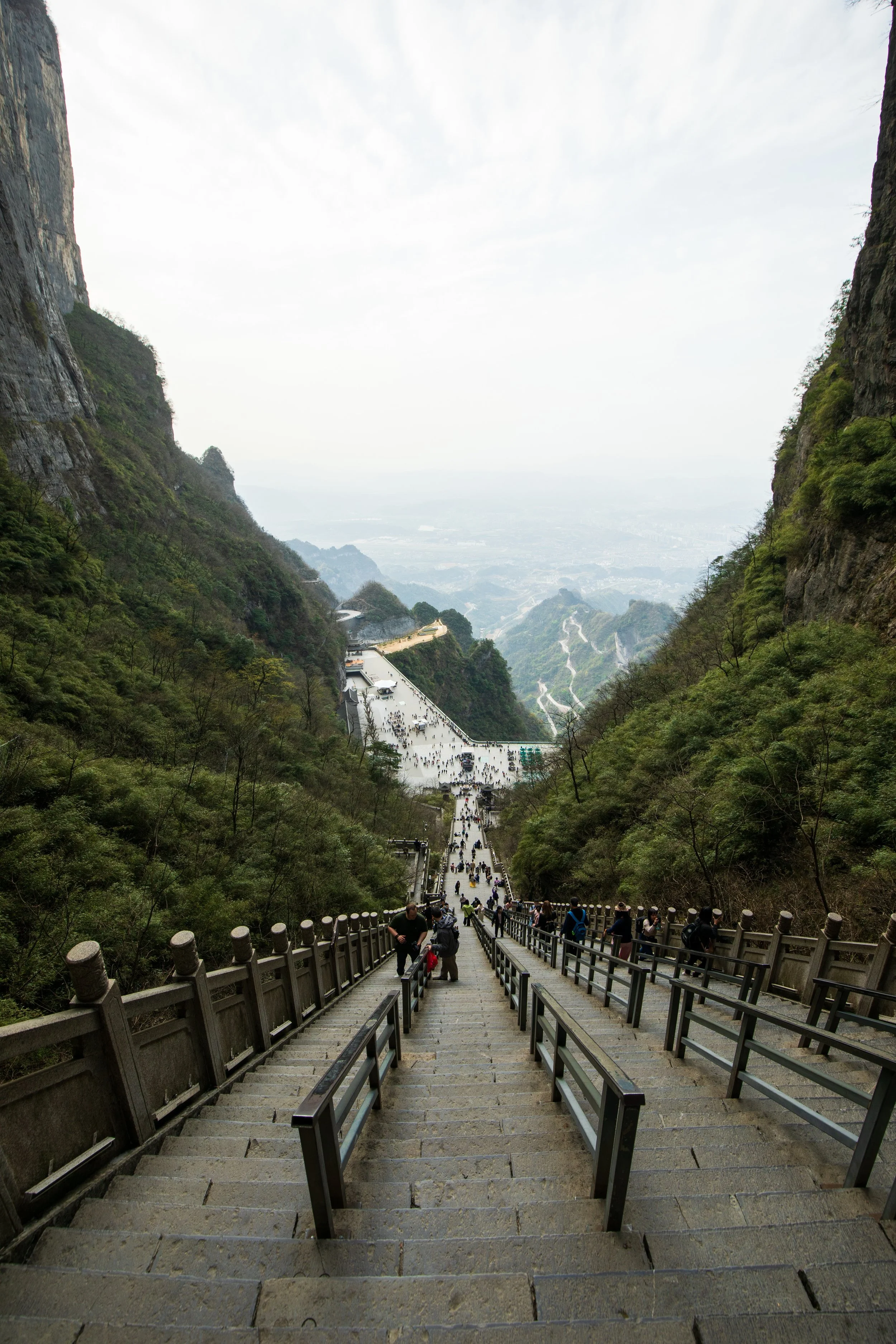
Since there are a lot of steps, the journey upward is probably best avoided by choosing Line A, or by paying a little extra for those escalators (32¥).
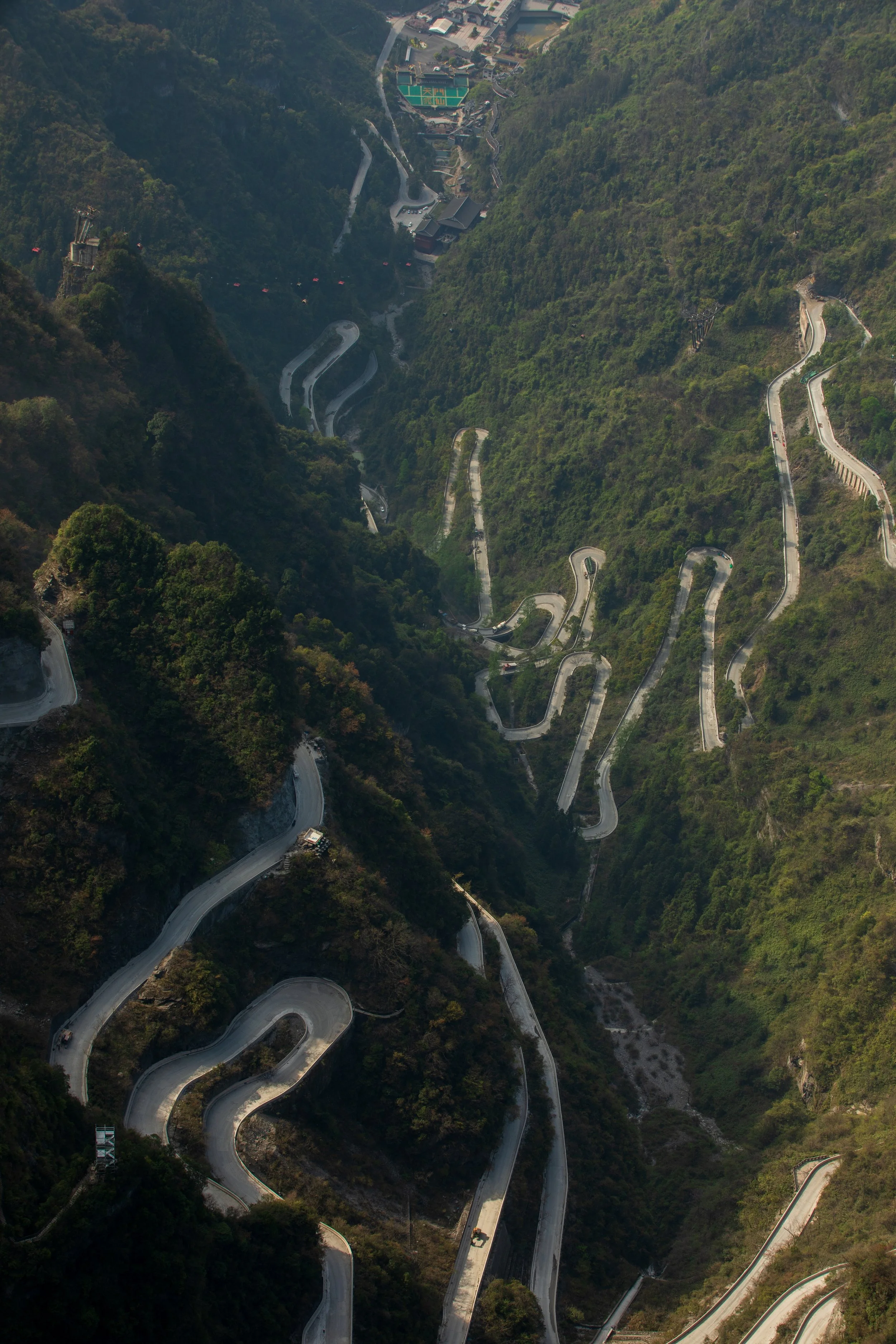
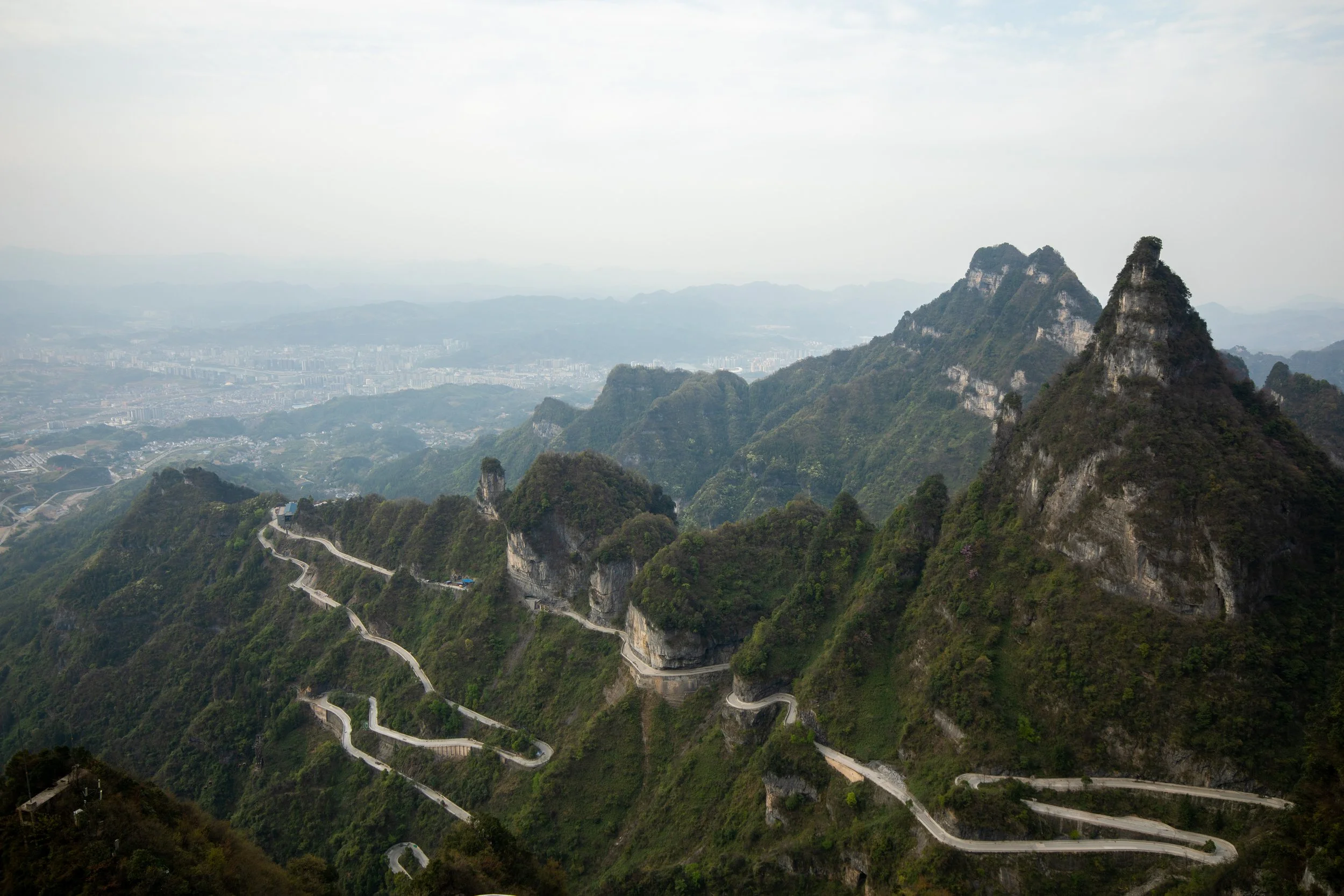
99 Bends Road
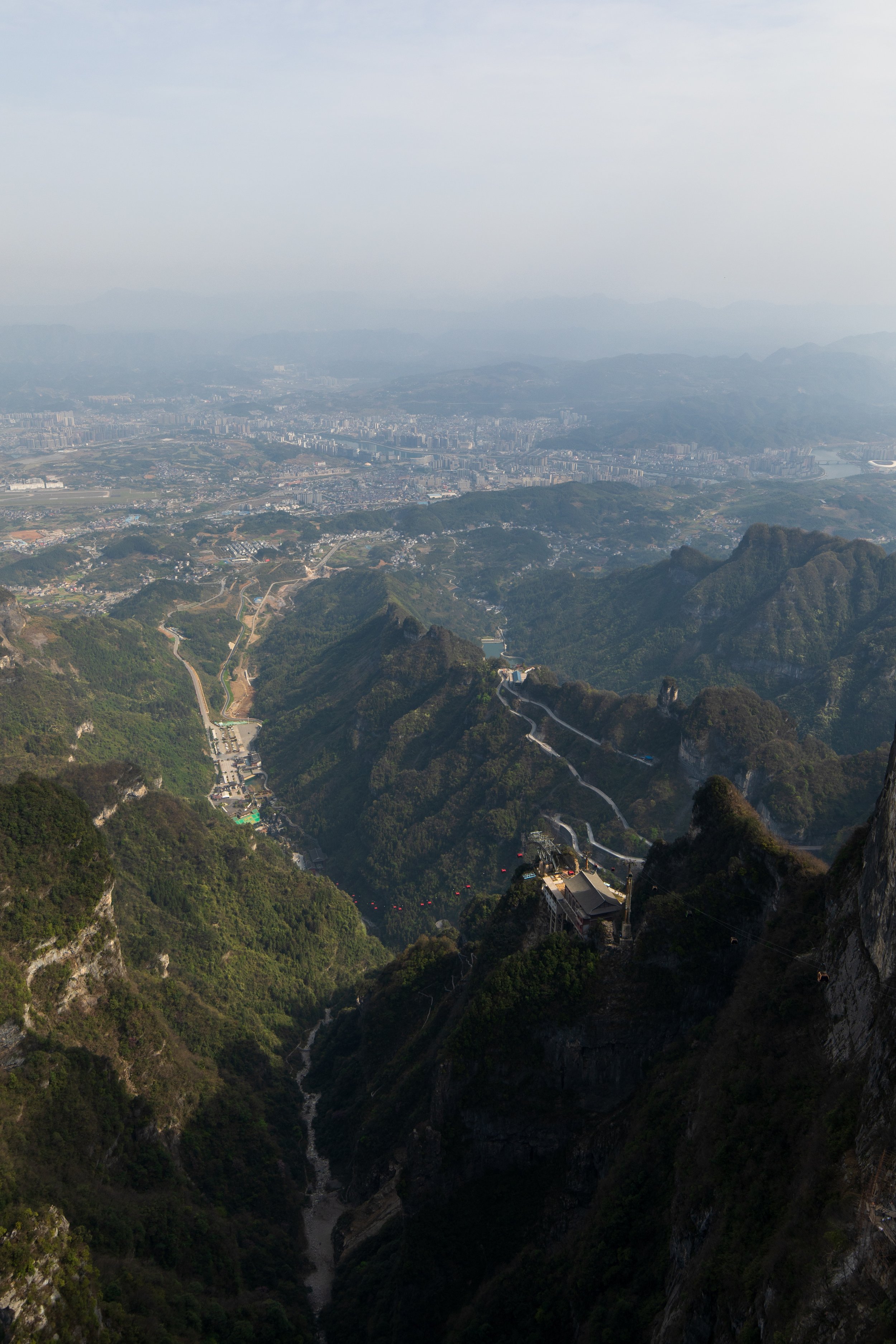
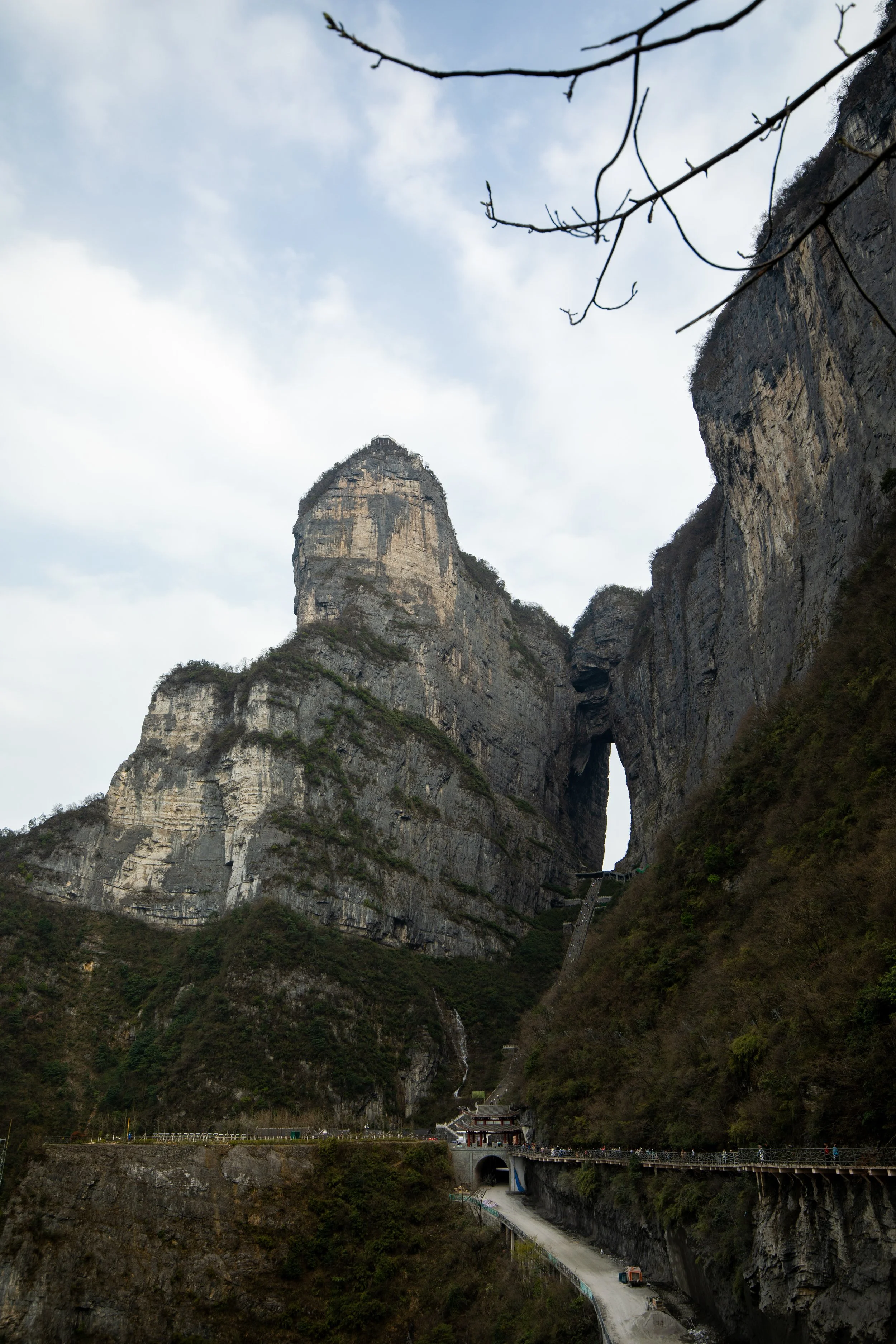
In the past, the Express Cableway part of the journey used to be done via shuttle bus along the 99 Bends Road. However, at the time of our visit (April 2025), this transfer by road has been replaced with a second cableway, while the road undergoes restoration works. This seems to be partly done now, but the other maintenance works on the upper section of the Tianmenshan Cableway are ongoing. I’m not sure how things might change after all maintenance works are completed - I’m thinking the Express Cableway will likely become a paid add-on.
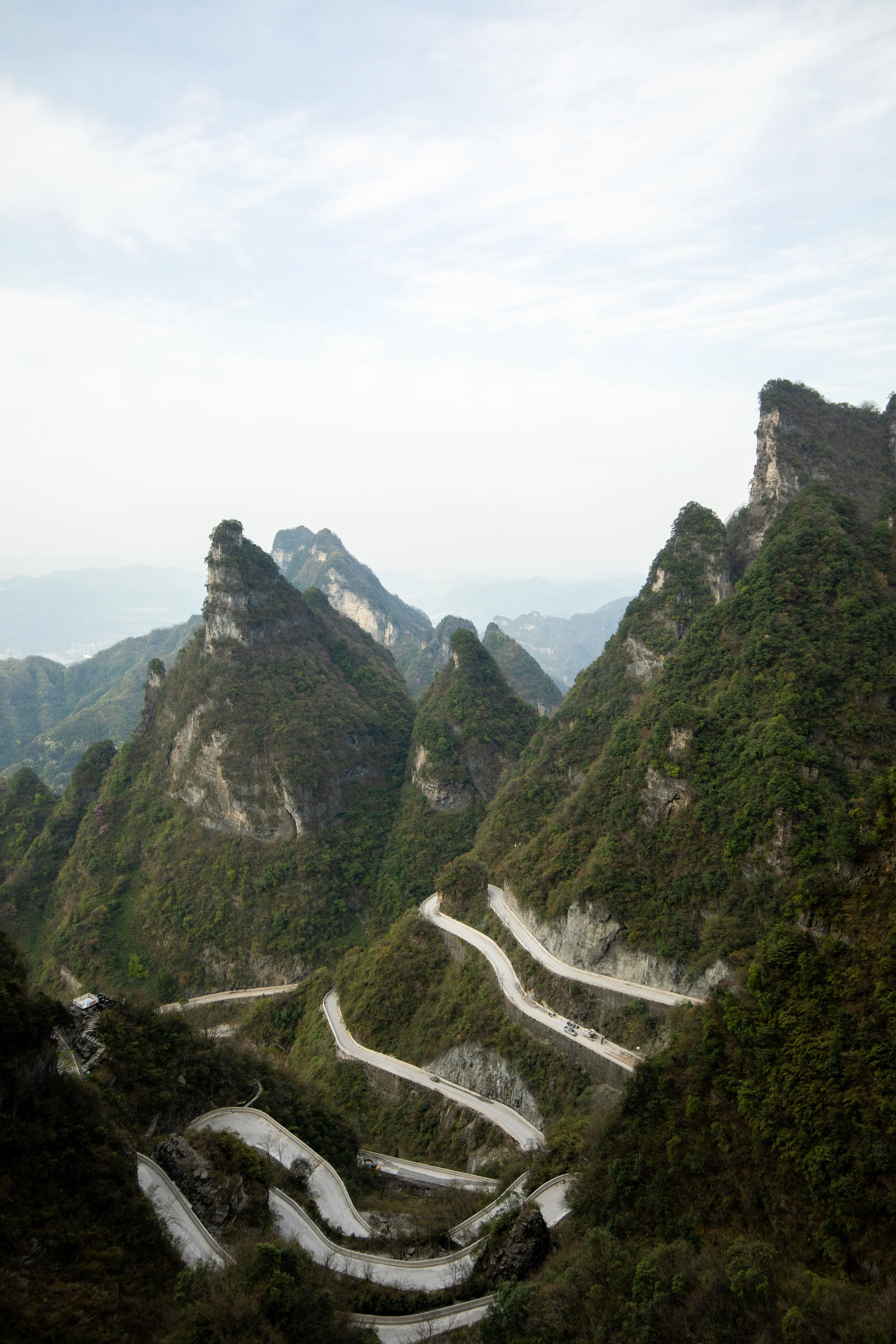
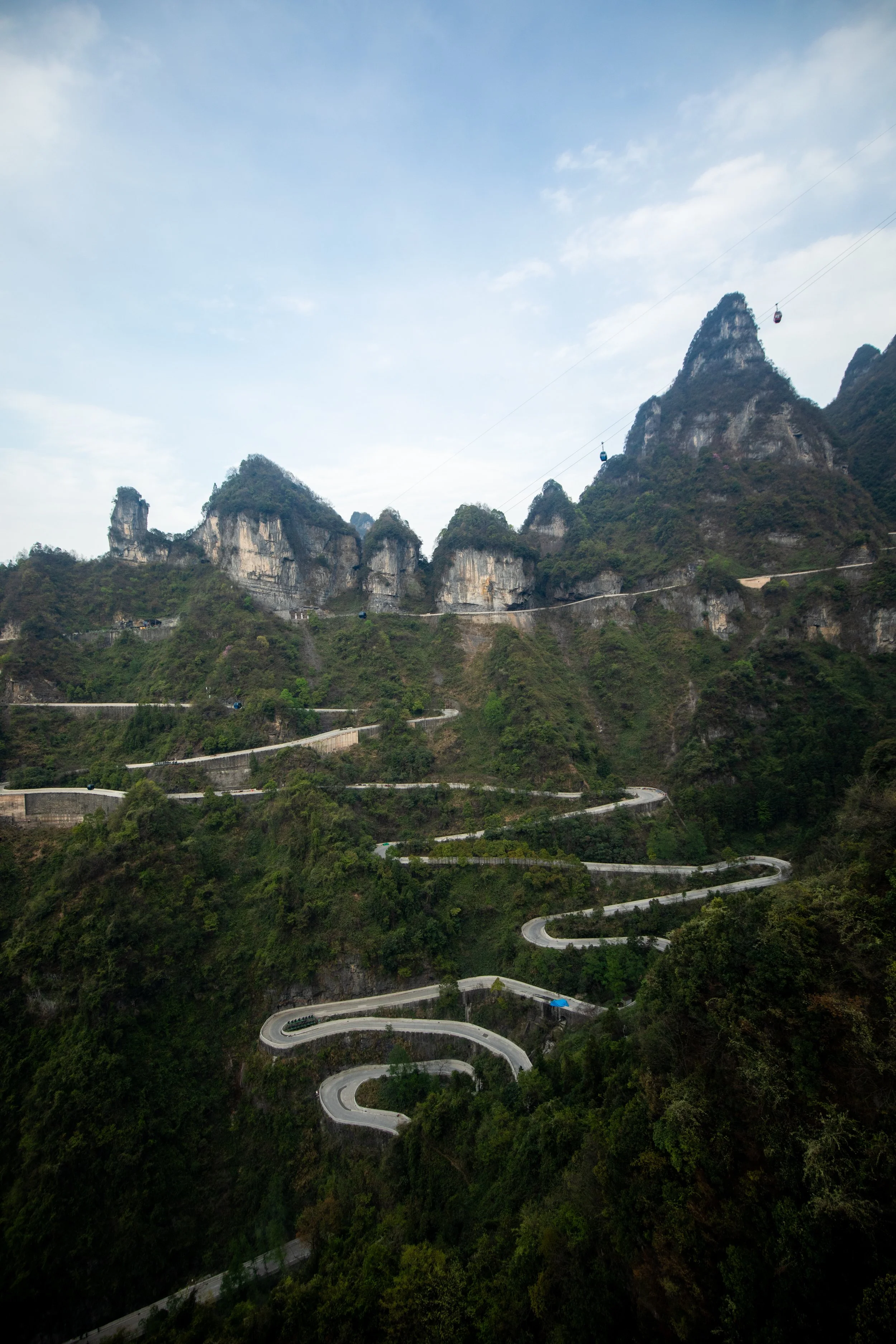
You get to see the best views of the 99 Bends Road from the cableways and some of the viewing platforms.
Final thoughts - is Tianmen Mountain worth visiting?
Tianmen Mountain is absolutely worth visiting!
Nature in China is often not just nature - it comes with cablecars, shuttle buses, escalators, elevators, chair lifts, tunnels, glass walkways, and 1000 viewpoints. Tianmen Mountain feels engineered for maximum visual impact — and that’s not a criticism. The infrastructure makes an otherwise difficult mountain extremely accessible.
This is not a remote wilderness experience. But if you accept that and adjust expectations, Tianmen Mountain promises dramatic scenery without multi-day hiking. And it really delivers on that promise!

All you need to know about visiting the Heaven’s Gate